Monday, September 21, 2026
  • AR
  • ENG
  • IDN
Muhammadiyah Media
  • EDUCATION
  • HEALTH
  • ECONOMY
  • HUMANITY
  • OTHERS
    • RELIGION
    • LAW & POLITICS
    • IDEOLOGY
    • SOCIO-CULTURE
    • ENVIRONMENT
    • MEDIA
No Result
View All Result
  • Login
Muhammadiyah Media
  • EDUCATION
  • HEALTH
  • ECONOMY
  • HUMANITY
  • OTHERS
    • RELIGION
    • LAW & POLITICS
    • IDEOLOGY
    • SOCIO-CULTURE
    • ENVIRONMENT
    • MEDIA
No Result
View All Result
  • Login
Muhammadiyah Media
No Result
View All Result
  • EDUCATION
  • HEALTH
  • ECONOMY
  • HUMANITY
  • OTHERS
Home Islamic Law

Visiting Graves During Eid: A Permissible Tradition When the Intention Is Right

by Persyarikatan Muhammadiyah
6 months ago
in Islamic Law, Religion
Reading Time: 3 mins read
A A
Visiting Graves During Eid: A Permissible Tradition When the Intention Is Right

Visiting Graves During Eid: A Permissible Tradition When the Intention Is Right

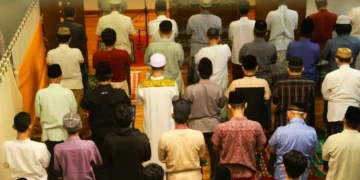
Each year when Eid al-Fitr arrives, a familiar scene appears across many communities. After performing the Eid prayer and visiting relatives, families often go to the graves of parents, grandparents, or other loved ones who have passed away. In many places, this practice has become part of the atmosphere surrounding the holiday.

From an Islamic perspective, visiting graves is generally permissible. The practice serves two important purposes. First, it allows Muslims to pray for those who have died. Second, it reminds the living of death and the temporary nature of worldly life.

However, it is important to understand that Islamic teachings do not prescribe grave visitation for any specific day, including Eid. Muslims may visit graves at any time.

The permissibility of visiting graves can be seen in the sayings of Muhammad. In one narration reported by Buraidah, the Prophet said:

عَنْ بُرَيْدَةَ قَالَ رَسُولُ اللهِ صلى الله عليه وسلم كُنْتُ نَهَيْتُكُمْ عَنْ زِيَارَةِ الْقُبُورِ فَقَدْ أُذِنَ لِمُحَمَّدٍ فِي زِيَارَةِ قَبْرِ أُمِّهِ فَزُورُوهَا فَإِنَّهَا تُذَكِّرُ الآخرة. [رواه مسلم وابو داود والترمذي وابن حبان والحاكم]

“Reported from Buraidah, he said: The Messenger of God said, ‘I once forbade you from visiting graves. But Muhammad has now been permitted to visit his mother’s grave. Therefore visit graves, for they remind you of the Hereafter.’” (Narrated by Muslim, Abu Dawud, at-Tirmidhi, Ibn Hibban, and al-Hakim).

Another narration reported by Abu Hurairah further reinforces this teaching:

عَنْ أَبِي هُرَيْرَةَ قَالَ قَالَ رَسُولُ اللهِ صلى الله عليه وسلم اسْتَأْذَنْتُ رَبِّي تَعَالَى عَلَى أَنْ أَسْتَغْفِرَ لَهَا فَلَمْ يُؤْذَنْ لِي فَاسْتَأْذَنْتُ أَنْ أَزُورَ قَبْرَهَا فَأُذِنَ لِي فَزُورُوا الْقُبُورَ فَإِنَّهَا تُذَكِّرُ بِالْمَوْتِ. [رواه الجماعة]

“Reported from Abu Hurairah, he said: The Messenger of God said, ‘I asked my Lord for permission to seek forgiveness for my mother, but I was not granted permission. Then I asked permission to visit her grave, and it was granted. Therefore visit graves, for they remind one of death.’” (Narrated by the major hadith collectors).

RelatedArticle

Wasathiyah Islam as a Foundation for Universal Dakwah in a Diverse World

Bullying in the Hadith: Harming Others Comes at a Cost

Qada and Qadar Should Not Become an Excuse for Passivity

Intention Determines the Meaning of the Practice

These narrations show that the primary purpose of visiting graves is to remember death and the life of the Hereafter, while also praying for those who have passed away. When someone stands before a grave, it becomes a reminder that worldly life is temporary and that every person will ultimately return to God.

For this reason, intention plays a crucial role. The Prophet emphasized that every action is judged according to intention. In a well-known hadith narrated by Umar ibn al-Khattab, he said:

عَنْ عَلْقَمَةَ بْنِ وَقَاصِ اللَّيْئِي قَالَ سَمِعْتُ عُمَرَ بْنَ الْخَطَّابِ يَقُولُ قَالَ رَسُولُ اللَّهِ –صلى الله عليه وسلم – « إِنَّمَا الأَعْمَالُ بِالنِّيَّاتِ. [رواه الجماعة]

“Reported from ‘Alqamah ibn Waqas al-Laythi, who said: I heard Umar ibn al-Khattab say while on the pulpit, ‘I heard the Messenger of God say: Indeed, actions are judged by intentions.’” (Narrated by the major hadith collectors).

Therefore, visiting graves should be done with the intention of praying for the deceased and reflecting on one’s own life. It should never be used for practices that contradict Islamic teachings, such as asking favors from the dead or treating graves as intermediaries to God.

The Qur’an itself warns believers not to call upon anyone besides God:

وَلَا تَدْعُ مِنْ دُونِ اللَّهِ مَا لَا يَنْفَعُكَ وَلَا يَضُرُّكَ فَإِنْ فَعَلْتَ فَإِنَّكَ إِذًا مِنَ الظَّالِمِينَ

“And do not call upon anything besides God that can neither benefit you nor harm you. If you do so, then you will surely be among the wrongdoers.” (QS. Yunus (10): 106)

When many families visit graves during Eid, the reason is usually cultural and social rather than religious obligation. Eid often brings relatives together after long periods apart, and the extended holiday provides time for family members to visit the graves of parents or ancestors together.

In this sense, Eid simply becomes a convenient moment. It is not a religiously mandated time for grave visitation.


Referensi:

Council for Religious Opinion and Reform of Muhammadiyah Central Board, “Hukum dan Tuntunan Ziarah Kubur”, in Suara Muhammadiyah magazine No.10, 2013.


Tags: Eid al-Fitrjurisprudenceramadan
ShareTweetSendShareShare
Previous Post

Haedar Nashir: Muhammadiyah Bali’s Response to Eid and Nyepi Should be a Model

Next Post

Menstruating Women Encouraged to Attend Eid Prayer Grounds

RelatedPosts

If a Masbuq Joins During the Imam’s Bowing, Must They Still Recite Al-Fatihah?
Islamic Law

If a Masbuq Joins During the Imam’s Bowing, Must They Still Recite Al-Fatihah?

4 September 2026
Different Forms of Worship Share the Same Prophetic Foundation, Muslims Must Not Judge One Another
Islamic Law

Different Forms of Worship Share the Same Prophetic Foundation, Muslims Must Not Judge One Another

14 August 2026
Can an Imam Lead Congregational Prayer While Seated?
Islamic Law

Can an Imam Lead Congregational Prayer While Seated?

5 August 2026
Is It Permissible to Listen to Songs Sung by Women?
Islamic Law

Is It Permissible to Listen to Songs Sung by Women?

31 July 2026
Next Post
Menstruating Women Encouraged to Attend Eid Prayer Grounds

Menstruating Women Encouraged to Attend Eid Prayer Grounds

Prepare Your Best Attire for Eid, but It Need Not Be New

Prepare Your Best Attire for Eid al-Fitr, but It Need Not Be New

Keeping Children Safe during Eid: Muhammadiyah Stresses Hygiene in Social Interactions

Keeping Children Safe during Eid: Muhammadiyah Stresses Hygiene in Social Interactions

Populer News

  • Safa and Marwa: Uncovering the Historical Depths of Two Sacred Hills

    Safa and Marwa: Uncovering the Historical Depths of Two Sacred Hills

    0 shares
    Share 0 Tweet 0
  • Muhammadiyah Appoints Crown Prince of Perlis as UMAM’s First Chancellor

    0 shares
    Share 0 Tweet 0
  • Is It Permissible for Muslims to Blow Out Birthday Candles?

    0 shares
    Share 0 Tweet 0
  • Ta’aruf in Islam: Ethical Guidelines for Getting to Know Potential Spouse

    0 shares
    Share 0 Tweet 0
  • Leader’s Profile: dr. H. Agus Taufiqurrohman, Sp.S., M.Kes.

    0 shares
    Share 0 Tweet 0
  • Leader’s Profile: Dr. H. M. Busyro Muqoddas, S.H., M.Hum.

    0 shares
    Share 0 Tweet 0
  • Fatwa on Using Mirin in Cooking for Muslims in Japan

    0 shares
    Share 0 Tweet 0
  • Muhammadiyah and NU Are the Largest and Most Influential Religious Organizations in the World

    0 shares
    Share 0 Tweet 0
  • Is It Permissible to Listen to Songs Sung by Women?

    0 shares
    Share 0 Tweet 0
  • Leader’s Profile: Prof. Dr. Haedar Nashir, M.Si.

    0 shares
    Share 0 Tweet 0

Council

  • Religious Opinion & Tajdid
  • Religious Preaching
  • Higher Education, Research, & Development
  • Elementary, Secondary, & Non-Formal Education
  • Cadre & Human Resources
  • Public Health
  • Social Welfare
  • Economy, Business, & Tourism
  • Waqf Utilization
  • Community Empowerment
  • Law and Human Rights
  • Enviromental Preservation
  • Publications & Information

Institutions

  • Islamic Boarding School
  • Branch & Mosque Development
  • Strategic Studies & Partnerships
  • Financial Supervision & Development
  • Disaster Management Center
  • Charity Management
  • Micro, Small, & Medium Enterprise
  • Politics & Public Policy
  • Arts & Culture
  • Sports & Development
  • International Relations & Cooperation
  • Community Da'wah
  • Halal Auditing & "Halalan Thayyiban" Studies
  • Hajj & Umroh
  • Legal Aid & Public Advocacy

Bureau

  • Organization Development
  • Financial Management
  • Communication & Public Services

Ortom

  • 'Aisyiyah Woman Association
  • Muhammadiyah Youth Association
  • Nasyiatul 'Aisyiyah Young Woman Association
  • Muhammadiyah University Student Association
  • Muhammadiyah Student Association
  • Muhammadiyah Tapak Suci Martial Arts
  • Muhammadiyah Hizbul Wathan Scouts

Sumatra Region

  • Nanggroe Aceh Darussalam
  • Sumatra Utara
  • Sumatra Selatan
  • Sumatra Barat
  • Bengkulu
  • Riau
  • Kepulauan Riau
  • Jambi
  • Bangka Belitung

Kalimantan Region

  • Kalimantan Barat
  • Kalimantan Timur
  • Kalimantan Selatan
  • Kalimantan Tengah
  • Kalimantan Utara

Jawa Region

  • D.I. Yogyakarta
  • Banten
  • DKI Jakarta
  • Jawa Barat
  • Jawa Tengah
  • Jawa Timur

Bali & Kepulauan Nusa Tenggara

Region

  • Bali
  • Nusa Tenggara Barat
  • Nusa Tenggara Timur

Sulawesi Region

  • Gorontalo
  • Sulawesi Barat
  • Sulawesi Tengah
  • Sulawesi Utara
  • Sulawesi Tenggara
  • Sulawesi Selatan

Maluku dan Papua Region

  • Maluku Utara
  • Maluku
  • Papua
  • Papua Barat
  • Papua Barat daya

Special Branch

  • Kairo Mesir
  • Iran
  • Sudan
  • Belanda
  • Jerman
  • United Kingdom
  • Libya
  • Malaysia
  • Prancis
  • Amerika Serikat
  • Jepang
  • Tunisia
  • Pakistan
  • Australia
  • Rusia
  • Taiwan
  • Tunisia
  • TurkI
  • Korea Selatan
  • Tiongkok
  • Arab Saudi
  • India
  • Maroko
  • Yordania
  • Yaman
  • Spanyol
  • Hongaria
  • Thailand
  • Kuwait
  • New Zealand

Category

  • Education
  • Health
  • Economy
  • Humanity
  • Religion
  • Law & Politics
  • Ideology
  • Culture
  • Media

About

  • History
  • Brand Guideline

Services

  • Information

Apps

  • Muhammadiyah ID
  • MASA
  • EventMu
  • BukuMu
  • SehatMu
  • KaderMu
  • LabMu

More Information

  • Editorial
  • Contact
  • Privacy Policy
© 2024 Persyarikatan Muhammadiyah

Welcome Back!

Login to your account below

Forgotten Password?

Retrieve your password

Please enter your username or email address to reset your password.

Log In

Add New Playlist

No Result
View All Result
  • icon bendera arab
  • bendera indonesia
  • EDUCATION
  • HEALTH
  • ECONOMY
  • HUMANITY
  • OTHERS
    • RELIGION
    • LAW & POLITICS
    • IDEOLOGY
    • SOCIO-CULTURE
    • ENVIRONMENT
    • MEDIA
  • Login

© 2024 Persyarikatan Muhammadiyah - Cahaya Islam Berkemajuan.