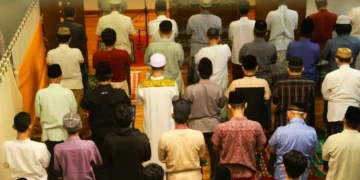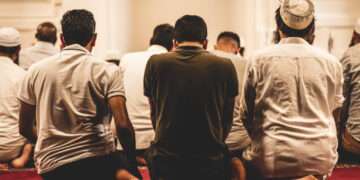


Eid al-Fitr marks a moment of joy and spiritual renewal for Muslims around the world. The celebration, however, is not limited to those who perform the ritual prayer. Rather, the teachings of Muhammad emphasize broad participation across the entire community.

In particular, women who are menstruating, though exempt from performing the prayer, could still attend the Eid gathering. Their presence allows them to share in the communal atmosphere and to listen to the sermon delivered during the event.
Umm ‘Atiyyah reported:
عَنْ أُمِّ عَطِيَّةَ قَالَتْ أَمَرَنَا رَسُولُ اللهِ صَلَّى اللهُ عَلَيْهِ وَسَلَّمَ أَنْ نُخْرِجَهُنَّ فِي الْفِطْرِ وَاْلأَضْحَى الْعَوَاتِقَ وَالْحُيَّضَ وَذَوَاتِ الْخُدُورِ فَأَمَّا الْحُيَّضُ فَيَعْتَزِلْنَ الصَّلاَةَ وَيَشْهَدْنَ الْخَيْرَ وَدَعْوَةَ الْمُسْلِمِينَ قُلْتُ يَا رَسُولَ اللهِ إِحْدَانَا لاَ يَكُونُ لَهَا جِلْبَابٌ قَالَ لِتُلْبِسْهَا أُخْتُهَا مِنْ جِلْبَابِهَا.
“Reported from Umm ‘Atiyyah, she said: The Messenger of God instructed us to bring out women on Eid al-Fitr and Eid al-Adha—young girls, menstruating women, and those in seclusion. Menstruating women were to stay away from the prayer area, yet they should witness the goodness of the day and the gathering of Muslims. I asked, ‘O Messenger of God, what if one of us does not have a jilbab?’ He replied, ‘Let her sister lend her one.’” (Narrated by Muslim and other major hadith collectors)
This narration highlights the inclusive nature of Eid observerances. Even those who cannot perform the prayer still take part in the communal experience.
Inclusion beyond Ritual Participation
Moreover, another narration reinforces the same principle. In a report preserved by Ahmad ibn Hanbal, Umm ‘Atiyyah described a similar instruction:
عَنْ أُمِّ عَطِيَّةَ اْلأَنْصَارِيَّةِ قَالَتْ كَانَ رَسُولُ اللهِ صَلَّى اللهِ عَلَيْهِ وَسَلَّمَ يَأْمُرُنَا أَنْ نُخْرِجَ الْعَوَاتِقَ وَالْحُيَّضَ وَذَوَاتِ الْخُدُورِ فَأَمَّا الْحُيَّضُ فَيَعْتَزِلْنَ الْمُصَلَّى وَيَشْهَدْنَ الْخَيْرَ وَالدَّعْوَةَ مَعَ الْمُسْلِمِينَ
“Reported from Umm ‘Atiyyah al-Ansariyyah, she said: The Messenger of God instructed us to bring out young women, menstruating women, and those in seclusion. Menstruating women should remain apart from the prayer space, yet they should witness the goodness of the day and the call alongside the Muslims.” (Narrated by Ahmad)
Thus, Islamic teachings draw a clear distinction between ritual obligation and communal presence. Menstruating women do not join the prayer rows. However, it is encouraged for them to attend, listen, and reflect.
Furthermore, the instruction underscores the social and spiritual dimensions of Eid. The gathering serves not only as a moment of worship but also as a shared experience of unity, guidance, and celebration.
Therefore, scholars note that participation in Eid extends beyond formal prayer. The presence of all members of the community—including those unable to perform certain rituals—strengthens the collective spirit of the occasion.
Referensi:
Majelis Tarjih dan Tajdid Pimpinan Pusat Muhammadiyah, Tuntunan Idain dan Qurban, Yogyakarta: Suara Muhammadiyah.