

MUHAMMADIYAH.OR.ID, PAKISTAN – Diaspora cadres of the Special Branch Board of Muhammadiyah (PCIM) in Pakistan have received strengthened training in Islamic social finance literacy through an International Community Service program.

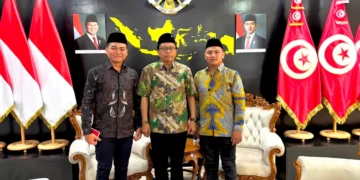
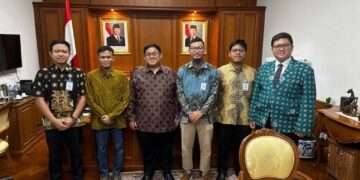
The program was organized by lecturers from Muhammadiyah University of Surakarta (Universitas Muhammadiyah Surakarta/UMS), who also serve in LazisMU Central Java, in collaboration with LazisMU Pakistan. The event took place on Monday (26/01) at the Indonesian Corner of the National Library of Pakistan.
Through this initiative, organizers aim to enhance the capacity of Islamic philanthropy among the Indonesian diaspora in Pakistan. Accordingly, the program focused on institutional strengthening, improving understanding of zakat jurisprudence, and advancing sound governance in Islamic financial management.
Building Institutional Capacity and Sustainable Programs
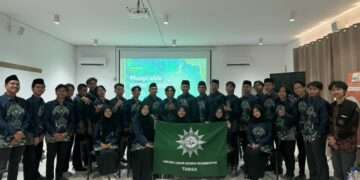
The activity was delivered through three seminar sessions targeting LazisMU cadres and members of the wider public. The first two sessions were conducted exclusively for LazisMU Pakistan cadres.
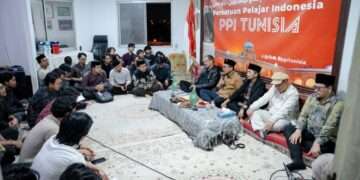
Both sessions took place at the Indonesian Corner of the National Library of Pakistan. Meanwhile, the third session was held openly at the Muhammadiyah Da’wah House in Islamabad, drawing approximately 45 participants.
Fauzul Hanif Noor Athief, Vice Dean for Research, Collaboration, and Alumni Affairs at UMS’s Faculty of Islamic Studies, who also serves as Vice Chairman of LazisMU Central Java, presented the material in the first session. He emphasized the importance of structured program management and well-planned social initiatives oriented toward sustainability.
According to Fauzul, philanthropic programs should play their role as legacy initiatives that are easy to implement, broad in impact, and sustainable over time. This approach, he noted, is essential for diaspora LazisMU cadres seeking to manage social programs in a professional and accountable manner.
Strengthening Sharia Compliance and Public Trust
The second session featured Lukmanul Hakim, Head of the Undergraduate Program in Sharia Economic Law at UMS. He presented material on the jurisprudence of fundraising and zakat distribution.
The session further underscored the importance of adherence to sharia principles in all philanthropic activities. Such compliance, Lukmanul stressed, serves as the primary basis for strengthening public trust in Islamic philanthropic institutions.
The third session carried the theme “Strengthening the Role of Islamic Philanthropy for the Indonesian Diaspora in Pakistan through Institutional Capacity Building and Islamic Social Finance Education.” It featured Fahmi Ali Hudaefi, an Islamic finance specialist at the United Nations, alongside Muhammad Subhi Aprianto, a UMS academic.
Together, they delivered a comprehensive overview of Islamic finance concepts and the practical implementation of Islamic social finance management. Their discussion covered operational mechanisms, governance frameworks, and strategies for strengthening institutional capacity.
Through this program, organizers hope to foster sustained synergy between UMS, LazisMU Central Java, and LazisMU Pakistan. Ultimately, literacy in Islamic social finance must reinforce the role of Islamic philanthropy among the Indonesian diaspora.
Translator: Bintang Adrian