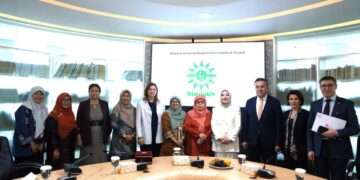


MUHAMMADIYAH.OR.ID, YOGYAKARTA — The Central Board of ‘Aisyiyah (PP ‘Aisyiyah) has called for the full implementation of Government Regulation No. 17 of 2025 on the Governance of Electronic Systems for Child Protection (PP Tunas) along with its implementing rule, Ministerial Regulation No. 9 of 2026. The policy officially took effect on March 28, 2026.

Under the regulation, children under the age of 16 must not own social media accounts. Consequently, the deactivation of children’s accounts across major digital platforms has begun in stages. These platforms include YouTube, TikTok, Facebook, Instagram, Threads, X, Bigo Live, and Roblox.
Salmah Orbayinah, President of ‘Aisyiyah, emphasized that the high rate and duration of internet use among children must be matched by a safe and child-friendly digital ecosystem. This, she noted, includes ensuring accessibility for children with disabilities.
“Children are highly vulnerable to becoming victims of crimes in digital spaces,” she said. “These range from cyberbullying and digital addiction without adequate literacy to fraud, sexual exploitation, online gender-based violence, as well as exposure to pornography and online gambling.”
Rising Risks in the Digital Landscape
Data indicate that internet users under the age of 18 account for 48 percent of total users, with approximately 80 percent of them accessing the internet for up to seven hours per day. Meanwhile, data from PPATK reveal that nearly 24,000 children aged 10 to 18 have fallen victim to online sexual exploitation and gender-based violence.
In addition, the National Center for Missing and Exploited Children has recorded more than 5.5 million pieces of child pornography content. These figures, according to Salmah, underscore the urgency of stronger state intervention in protecting children online.
However, she stressed that regulations must go beyond formal provisions. “We welcome this policy as a state instrument for child protection,” she said. “Nevertheless, its implementation must be truly effective.”
The implementing regulation outlines several obligations for Electronic System Providers, including setting age restrictions, conducting self-assessments of products and features, applying child protection design standards, verifying users’ ages, and reporting risk profiles.
Challenges in Enforcement and the Need for Collaboration
Tri Hastuti Nur Rochimah, Secretary General of PP ‘Aisyiyah, noted that in the early stages of implementation, not all digital platforms have demonstrated compliance with the regulation.
“Child protection is both a fundamental right and a mandate for service providers,” she said. “We urge digital platforms to immediately comply with PP Tunas. We are hoping that children are protected from various forms of violence and crime in digital spaces.”
Moreover, Tri highlighted several key challenges. These include weak age verification mechanisms, low platform compliance, limited oversight and enforcement, and gaps in digital literacy among both parents and children. She also pointed to messaging applications, which often serve as channels for the spread of illegal content, including pornography and online gambling.
According to Tri, building a safe digital ecosystem for children requires collaboration across multiple sectors. ‘Aisyiyah, as an organization focused on the protection of women and children, has expressed its readiness to contribute through digital literacy initiatives.
“Children may have digital skills, but they still need stronger foundations in ethics, security, and digital culture,” she said. “This is essential to help them protect themselves from risks in the digital environment.”
Furthermore, she emphasized the critical role of parents as companions in children’s digital lives. The PP Tunas regulation assigns parents responsibilities that include education, supervision, consent, and the use of parental control features.
“This role requires both understanding and skills,” she added. “Therefore, digital literacy for parents must continue to be strengthened.”
Salmah also noted that ‘Aisyiyah has developed a program called Madrasah Digital ‘Aisyiyah (Madina), which targets parents and the elderly. The initiative reflects a growing recognition that digital literacy is a fundamental component of family resilience.
“In the digital era, family digital literacy becomes a crucial pillar,” she concluded, “ensuring that digital spaces bring more benefit than harm.”