Friday, October 2, 2026
  • AR
  • ENG
  • IDN
Muhammadiyah Media
  • EDUCATION
  • HEALTH
  • ECONOMY
  • HUMANITY
  • OTHERS
    • RELIGION
    • LAW & POLITICS
    • IDEOLOGY
    • SOCIO-CULTURE
    • ENVIRONMENT
    • MEDIA
No Result
View All Result
  • Login
Muhammadiyah Media
  • EDUCATION
  • HEALTH
  • ECONOMY
  • HUMANITY
  • OTHERS
    • RELIGION
    • LAW & POLITICS
    • IDEOLOGY
    • SOCIO-CULTURE
    • ENVIRONMENT
    • MEDIA
No Result
View All Result
  • Login
Muhammadiyah Media
No Result
View All Result
  • EDUCATION
  • HEALTH
  • ECONOMY
  • HUMANITY
  • OTHERS
Home Law & Politics

Can Menstruating Women Perform I’tikaf in the Mosque?

by Persyarikatan Muhammadiyah
7 months ago
in Law & Politics, Religion
Reading Time: 4 mins read
A A
Can Menstruating Women Perform I’tikaf in the Mosque?

Can Menstruating Women Perform I’tikaf in the Mosque?

I’tikaf, or staying in the mosque with the intention of taqarrub (drawing closer) to God, is a highly recommended act of worship, especially during the last ten nights of Ramadan. 

This practice is based on a hadith of the Prophet Muhammad: 

أَنَّ النَّبِيَّ صَلَّى اللّٰهُ عَلَيْهِ وَسَلَّمَ كَانَ يَعْتَكِفُ الْعَشَرَ الْأَوَاخِرَ مِنْ رَمَضَانَ حَتَّى تَوَفَّاهُ اللّٰهُ، ثُمَّ اعْتَكَفَ أَزْوَاجُهُ مِنْ بَعْدِهِ

(رواه مسلم)

“Indeed, the Prophet (PBUH) used to observe i’tikaf during the last ten days of Ramadan until he passed away. Then his wives continued the practice after his death.” (Narrated by Muslim)

In general, the requirements for i’tikaf include being Muslim, having reached maturity (baligh), performing it in a mosque, making the proper intention. However, a question often arises regarding women who are experiencing menstruation. Are they prevented from participating in this virtuous act of worship?

The Council for Religious Opinion and Reform of Muhammadiyah Central Board offers an enlightening perspective on this matter. According to its scholarly analysis, there is room for menstruating women to still observe i’tikaf in the mosque. The argument is taken based on a comprehensive examination of Islamic sources. 

Menstruating Women May Enter the Mosque

Doubts about menstruating women performing i’tikaf usually stem from the assumption that they are prohibited from entering a mosque. One of the texts frequently cited in this discussion is a hadith narrated by Ibn Majah:

حَدَّثَنَا أَبُو بَكْرِ بْنُ أَبِي شَيْبَةَ وَمُحَمَّدُ بْنُ يَحْيَى قَالَا حَدَّثَنَا أَبُو نُعَيْمٍ حَدَّثَنَا ابْنُ أَبِي غَنِيَّةَ عَنْ أَبِي الْخَطَّابِ الْهَجَرِيِّ عَنْ مَحْدُوجٍ الذُّهْلِيِّ عَنْ جَسْرَةَ قَالَتْ أَخْبَرَتْنِي أُمُّ سَلَمَةَ قَالَتْ دَخَلَ رَسُولُ اللهِ صَلَّى اللهُ عَلَيْهِ وَسَلَّمَ صَرْحَةَ هَذَا الْمَسْجِدِ فَنَادَى بِأَعْلَى صَوْتِهِ إِنَّ الْمَسْجِدَ لاَ يَحِلُّ لِجُنُبٍ وَلاَ لِحَائِضٍ

“We were told by Abu Bakr ibn Abi Shaybah and Muhammad ibn Yahya, who said that Abu Nu‘aym narrated to us, from Ibn Abi Ghaniyyah, from al-Khattab al-Hajariy, from Mahduj adz-Dzuhliy, from Jasrah, who said that Umm Salamah informed me that the Messenger of God entered the courtyard of the mosque and proclaimed loudly: ‘Indeed, the mosque is not lawful for a person in a state of major ritual impurity nor for a menstruating woman.’” (Narrated by Ibn Majah)


However, the Muhammadiyah Tarjih Council considers this hadith weak because one of its narrators is majhul (unknown or unreliable). As such, it cannot serve as a strong legal foundation. Likewise, the instruction for menstruating women to stay away from the prayer area during Eid prayers is interpreted as an arrangement of prayer rows. Thus, it is not an absolute prohibition from entering the mosque.

However, there are authentic hadiths suggesting that menstruation does not necessarily prevent a woman from interacting within the mosque. One narration from Aisha states:

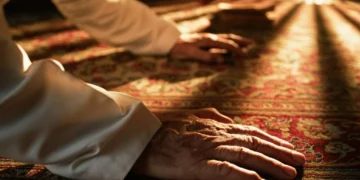
عَنْ عَائِشَةَ قَالَتْ قَالَ لِي رَسُولُ اللهِ صَلَّى اللهُ عَلَيْهِ وَسَلَّمَ نَاوِلِينِي الْخُمْرَةَ مِنْ الْمَسْجِدِ قَالَتْ فَقُلْتُ إِنِّي حَائِضٌ فَقَالَ إِنَّ حَيْضَتَكِ لَيْسَتْ فِي يَدِكِ

“Aisha reported: The Messenger of God said to me, ‘Hand me the prayer mat from the mosque.’ I replied, ‘I am menstruating.’ He said, ‘Your menstruation is not in your hand.’” (Narrated by Muslim)

The Prophet also did not forbid Aisha from entering the mosque during menstruation while performing the pilgrimage. But, she was not allowed to perform tawaf around the Kaaba. This indicates that menstruating women may be present in the mosque under two main conditions. First, they have a valid purpose—such as seeking knowledge or observing i’tikaf—and they ensure that menstrual blood does not contaminate the mosque.

Reciting the Qur’an and Remembering God During Major Impurity

The main activities during i’tikaf include reciting the Qur’an and engaging in remembrance of God (dhikr). The Muhammadiyah Tarjih Council argues that the prohibition of reciting the Qur’an for those in a state of major ritual impurity is more ethical (adab) in nature rather than a strict legal ban. It is because there is no authentic hadith explicitly prohibiting it.

On the contrary, there is a narration from Aisha:

عَنْ عَائِشَةَ رَضِيَ اللهُ عَنْهَا قَالَتْ كَانَ النَّبِيُّ صَلَّى اللهُ عَلَيْهِ وَسَلَّمَ يَذْكُرُ اللهَ عَلَى كُلِّ أَحْيَانِهِ

“Aisha reported that the Prophet used to remember God in all circumstances.” (Narrated by Muslim, Abu Dawud, and al-Tirmidhi)

Since the Qur’an itself is part of remembering God, menstruating women are therefore permitted to recite it during i’tikaf. Additionally, the verse “Lā yamassuhu illā al-muṭahharūn” (Qur’an 56:79) is often misunderstood as a prohibition against touching the Qur’an without ritual purity. Historically and exegetically, the phrase “those who are purified” refers to angels or believers with purified hearts, not simply those free from minor or major ritual impurity.

Based on these considerations, menstruating women still have the opportunity to gain the blessings of the final nights of Ramadan through i’tikaf. Although they are not permitted to fast or perform ritual prayers during menstruation, they may still remain in the mosque, engage in remembrance of God, and study the Qur’an.


References

1. Majelis Tarjih dan Tajdid Pimpinan Pusat Muhammadiyah, “Bolehkah Wanita Haid Masuk Masjid untuk Ikut Pengajian?”, Majalah Suara Muhammadiyah, No. 5, 2014.

RelatedArticle

Catholic Nun Earns Master’s in Midwifery at UNISA Yogyakarta, Strengthening Interfaith Brotherhood

Muhammadiyah Strengthens Peace Diplomacy in the Bangsamoro Peace Process

Muhammadiyah Receives Palestinian Delegation to Discuss Conflict Dynamics and the Future of Peace

2. Majelis Tarjih dan Tajdid Pimpinan Pusat Muhammadiyah, “Fatwa Tarjih Tentang I’tikaf”, https://web.suaramuhammadiyah.id/2016/06/25/fatwa-tarjih-tentang-itikaf/

3. Majelis Tarjih dan Tajdid Pimpinan Pusat Muhammadiyah, “Hukum Wanita Haid Membaca Al-Qur’an”, https://fatwatarjih.or.id/hukum-wanita-haid-membaca-al-quran/

.


Tags: jurisprudence
ShareTweetSendShareShare
Previous Post

Haedar Nashir: Zionist Israeli Genocide and Its Allies Have Undermined Modern Civilization

Next Post

‘Aisyiyah Warns of the Dangers of Grooming Targeting Women and Children in the Digital Era

RelatedPosts

What is the Prayer for Rain? The Prophet’s Supplication during Drought
Islamic Law

What is the Prayer for Rain? The Prophet’s Supplication during Drought

24 September 2026
If a Masbuq Joins During the Imam’s Bowing, Must They Still Recite Al-Fatihah?
Islamic Law

If a Masbuq Joins During the Imam’s Bowing, Must They Still Recite Al-Fatihah?

4 September 2026
Different Forms of Worship Share the Same Prophetic Foundation, Muslims Must Not Judge One Another
Islamic Law

Different Forms of Worship Share the Same Prophetic Foundation, Muslims Must Not Judge One Another

14 August 2026
Can an Imam Lead Congregational Prayer While Seated?
Islamic Law

Can an Imam Lead Congregational Prayer While Seated?

5 August 2026
Next Post
‘Aisyiyah Warns of the Dangers of Grooming Targeting Women and Children in the Digital Era

‘Aisyiyah Warns of the Dangers of Grooming Targeting Women and Children in the Digital Era

Welcoming Laylat al-Qadr with I’tikaf

Welcoming Laylat al-Qadr with I’tikaf

Communal Iftar Tradition Recognized by UNESCO

Communal Iftar Tradition Recognized by UNESCO

Populer News

  • National Narcotics Agency Commends Muhammadiyah’s Efforts in Eradicating Drug Abuse

    National Narcotics Agency Commends Muhammadiyah’s Efforts in Eradicating Drug Abuse

    0 shares
    Share 0 Tweet 0
  • Fatwa on Using Mirin in Cooking for Muslims in Japan

    0 shares
    Share 0 Tweet 0
  • The Islamic Character of Lionel Messi

    0 shares
    Share 0 Tweet 0
  • Is It Permissible for Muslims to Blow Out Birthday Candles?

    0 shares
    Share 0 Tweet 0
  • Safa and Marwa: Uncovering the Historical Depths of Two Sacred Hills

    0 shares
    Share 0 Tweet 0
  • Man of Action, Man of Dialogue: The Legacy of KH Ahmad Dahlan

    0 shares
    Share 0 Tweet 0
  • Leader’s Profile: dr. H. Agus Taufiqurrohman, Sp.S., M.Kes.

    0 shares
    Share 0 Tweet 0
  • Leader’s Profile: Drs. H. A. Dahlan Rais, M.Hum.

    0 shares
    Share 0 Tweet 0
  • Can One Animal Serve Both Aqiqah and Qurban? 

    0 shares
    Share 0 Tweet 0
  • Leader’s Profile: M. Sayuti, M.Pd., M.Ed., Ph.D.

    0 shares
    Share 0 Tweet 0

Council

  • Religious Opinion & Tajdid
  • Religious Preaching
  • Higher Education, Research, & Development
  • Elementary, Secondary, & Non-Formal Education
  • Cadre & Human Resources
  • Public Health
  • Social Welfare
  • Economy, Business, & Tourism
  • Waqf Utilization
  • Community Empowerment
  • Law and Human Rights
  • Enviromental Preservation
  • Publications & Information

Institutions

  • Islamic Boarding School
  • Branch & Mosque Development
  • Strategic Studies & Partnerships
  • Financial Supervision & Development
  • Disaster Management Center
  • Charity Management
  • Micro, Small, & Medium Enterprise
  • Politics & Public Policy
  • Arts & Culture
  • Sports & Development
  • International Relations & Cooperation
  • Community Da'wah
  • Halal Auditing & "Halalan Thayyiban" Studies
  • Hajj & Umroh
  • Legal Aid & Public Advocacy

Bureau

  • Organization Development
  • Financial Management
  • Communication & Public Services

Ortom

  • 'Aisyiyah Woman Association
  • Muhammadiyah Youth Association
  • Nasyiatul 'Aisyiyah Young Woman Association
  • Muhammadiyah University Student Association
  • Muhammadiyah Student Association
  • Muhammadiyah Tapak Suci Martial Arts
  • Muhammadiyah Hizbul Wathan Scouts

Sumatra Region

  • Nanggroe Aceh Darussalam
  • Sumatra Utara
  • Sumatra Selatan
  • Sumatra Barat
  • Bengkulu
  • Riau
  • Kepulauan Riau
  • Jambi
  • Bangka Belitung

Kalimantan Region

  • Kalimantan Barat
  • Kalimantan Timur
  • Kalimantan Selatan
  • Kalimantan Tengah
  • Kalimantan Utara

Jawa Region

  • D.I. Yogyakarta
  • Banten
  • DKI Jakarta
  • Jawa Barat
  • Jawa Tengah
  • Jawa Timur

Bali & Kepulauan Nusa Tenggara

Region

  • Bali
  • Nusa Tenggara Barat
  • Nusa Tenggara Timur

Sulawesi Region

  • Gorontalo
  • Sulawesi Barat
  • Sulawesi Tengah
  • Sulawesi Utara
  • Sulawesi Tenggara
  • Sulawesi Selatan

Maluku dan Papua Region

  • Maluku Utara
  • Maluku
  • Papua
  • Papua Barat
  • Papua Barat daya

Special Branch

  • Kairo Mesir
  • Iran
  • Sudan
  • Belanda
  • Jerman
  • United Kingdom
  • Libya
  • Malaysia
  • Prancis
  • Amerika Serikat
  • Jepang
  • Tunisia
  • Pakistan
  • Australia
  • Rusia
  • Taiwan
  • Tunisia
  • TurkI
  • Korea Selatan
  • Tiongkok
  • Arab Saudi
  • India
  • Maroko
  • Yordania
  • Yaman
  • Spanyol
  • Hongaria
  • Thailand
  • Kuwait
  • New Zealand

Category

  • Education
  • Health
  • Economy
  • Humanity
  • Religion
  • Law & Politics
  • Ideology
  • Culture
  • Media

About

  • History
  • Brand Guideline

Services

  • Information

Apps

  • Muhammadiyah ID
  • MASA
  • EventMu
  • BukuMu
  • SehatMu
  • KaderMu
  • LabMu

More Information

  • Editorial
  • Contact
  • Privacy Policy
© 2024 Persyarikatan Muhammadiyah

Welcome Back!

Login to your account below

Forgotten Password?

Retrieve your password

Please enter your username or email address to reset your password.

Log In

Add New Playlist

No Result
View All Result
  • icon bendera arab
  • bendera indonesia
  • EDUCATION
  • HEALTH
  • ECONOMY
  • HUMANITY
  • OTHERS
    • RELIGION
    • LAW & POLITICS
    • IDEOLOGY
    • SOCIO-CULTURE
    • ENVIRONMENT
    • MEDIA
  • Login

© 2024 Persyarikatan Muhammadiyah - Cahaya Islam Berkemajuan.