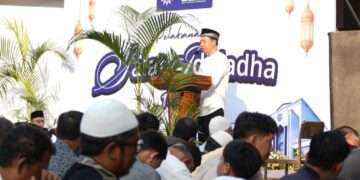


MUHAMMADIYAH.OR.ID, YOGYAKARTA—Hilman Latief, the Treasurer General of the Muhammadiyah Central Board, urged the organization to safeguard its “progressive template” this Saturday. During a Ramadan sermon at Muhammadiyah University of Yogyakarta, he described this forward-thinking approach as a vital tool for future challenges. Latief observed that Muhammadiyah currently operates with two distinct identities: a puritanical face and a reformist one. While both exist within the organization’s legal reasoning, he warned that the movement must not let rigid textualism overshadow its courageous spirit of renewal.

Latief explained that the puritanical side appears in fatwas that remain heavily centered on ancient texts. Consequently, this focus leaves limited room for ijtihad, or independent reasoning. Such a narrow scope makes it difficult for the organization to address the complexities of modern life effectively. In contrast, the reformist face shines through landmark decisions like the Global Unified Hijri Calendar and professional income zakat. These bold steps demonstrate Muhammadiyah’s willingness to engage with contemporary realities, even when such decisions spark significant controversy.
Between Textual Roots and Modern Reality
Regarding the global calendar, Latief noted that many people still struggle to grasp the concept fully. Misunderstandings persist not only among the public but also within the organization’s own membership. Similarly, the acceptance of professional zakat required a long and difficult process. Latief emphasized the need to protect this progress, especially since other major Islamic groups continue to reject it. For instance, some organizations view zakat strictly as a ritual worship that requires explicit prophetic precedent.
“Persis, for example, does not accept it,” Latief said. He explained that since professional zakat does not appear in classical texts, some groups consider it an impermissible addition to worship. Because Muhammadiyah chooses to recognize it, the organization stands apart as a leader in social-religious innovation. Therefore, Latief believes the movement must maintain this momentum to stay relevant. He argued that the organization should not allow a purely textual approach to dominate its future legal products.
Strengthening the Progressive Template
Looking ahead, Latief urged the Tarjih and Tajdid Council to make its progressive template more visible. “I think in the future, the progressive template, including within Tarjih, should become more apparent,” he stated. While he acknowledged that textual references remain important, he called for a clearer methodological definition of “text.” This clarity would allow for intellectual growth while maintaining a solid religious foundation. By doing so, Muhammadiyah can ensure its teachings remain grounded yet responsive to society.
Ultimately, Latief reaffirmed that the organization’s true strength lies in its balance. By combining textual fidelity with reformist courage, Muhammadiyah can continue to serve as a modernizing force. He believes that the movement must stay bold to fulfill its mission of “Progressive Islam.” As societal demands evolve, the organization’s legal reasoning must also expand to offer practical solutions. This commitment to renewal will likely define the movement’s trajectory for the next decade.
Translator: Bintang Adrian