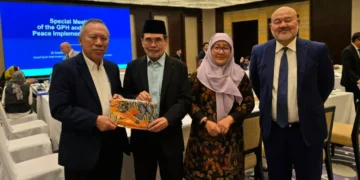


MUHAMMADIYAH.OR.ID, JAKARTA – Muhammadiyah Central Board received Mohammad Boroujerdi, Iran’s ambassador to Indonesia, on Tuesday (7/4) at its central headquarter in Jakarta, in a meeting that focused on escalating humanitarian concerns and prospects for global peace.

The visit was welcomed by Haedar Nashir, President of Muhammadiyah, alongside Syafiq A. Mughni and representatives from the organization’s International Relations and Cooperation Council.
During the meeting, Haedar expressed condolences over the recent war and humanitarian tragedies affecting Iran. However, he also voiced optimism that conflicts across the world could come to an end in the name of humanity and peace.
“For us, this tragedy is not merely about Iran as a nation or as a Muslim-majority country,” he said. “It is about a sovereign and independent state whose people have the right to live in peace, free from attacks under any pretext.”
War and the Crisis of Modern Civilization
Haedar emphasized that war and military aggression between nations not only destroy states but also erode the foundations of civilization itself. Moreover, he warned that the inability of international law to prevent such conflicts reflects a deeper crisis in modern global order.
“Muhammadiyah expresses sympathy and concern,” he said. “At the same time, we believe Iran will rise from this destructive tragedy and emerge stronger.”
He added that the situation in Iran sends a broader message to the world—that Muslim-majority nations have the potential to recover and contribute positively to global peace and humanity.
Iran’s Account of Recent Attacks
Iran’s Ambassador Boroujerdi expressed appreciation for Muhammadiyah’s support, noting that the organization has consistently voiced its support in an open and thoughtful manner.
He then described recent developments in Iran, including an attack on February 28, 2026, which targeted official residences, workplaces linked to Ayatollah Khomeini, and an educational institution in the city of Minab.
According to the Iranian Ambassador, the attack resulted in the deaths of hundreds of students, underscoring what he described as the indiscriminate nature of modern warfare.
“This sends a clear message,” he said. “Those responsible no longer distinguish between children and the elderly.”
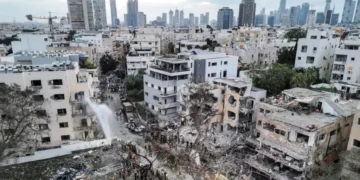
He further alleged that the attacks reflect broader geopolitical ambitions, accusing Israel and the United States of targeting sovereign nations through extreme measures. In addition to casualties, he said, public facilities—including mosques—were damaged, along with the surrounding environment.
Call for Global Awareness and Solidarity
The meeting concluded with a shared hope that international partners, including civil society organizations such as Muhammadiyah, would help raise awareness about the evolving geopolitical situation.
Moreover, both sides underscored the importance of fostering dialogue and promoting peace amid rising global tensions.
Through engagements like this, Muhammadiyah continues to position itself as a moral voice advocating humanitarian values, while encouraging international cooperation to address conflict and protect civilian lives.