Monday, September 28, 2026
  • AR
  • ENG
  • IDN
Muhammadiyah Media
  • EDUCATION
  • HEALTH
  • ECONOMY
  • HUMANITY
  • OTHERS
    • RELIGION
    • LAW & POLITICS
    • IDEOLOGY
    • SOCIO-CULTURE
    • ENVIRONMENT
    • MEDIA
No Result
View All Result
  • Login
Muhammadiyah Media
  • EDUCATION
  • HEALTH
  • ECONOMY
  • HUMANITY
  • OTHERS
    • RELIGION
    • LAW & POLITICS
    • IDEOLOGY
    • SOCIO-CULTURE
    • ENVIRONMENT
    • MEDIA
No Result
View All Result
  • Login
Muhammadiyah Media
No Result
View All Result
  • EDUCATION
  • HEALTH
  • ECONOMY
  • HUMANITY
  • OTHERS
Home Islamic Law

Islam Leaves Room for Differences as Long as They Do Not Contradict Definitive Evidence

by Persyarikatan Muhammadiyah
3 weeks ago
in Islamic Law, News, Religion
Reading Time: 5 mins read
A A
Islam Leaves Room for Differences as Long as They Do Not Contradict Definitive Evidence

Islam Leaves Room for Differences as Long as They Do Not Contradict Definitive Evidence

EN.MUHAMMADIYAH.OR.ID, YOGYAKARTA — Islam allows broad room for differences in thought. Such differences are acceptable as long as they are grounded in the Quran and Sunnah and do not concern matters whose authenticity or meaning is definitive. 

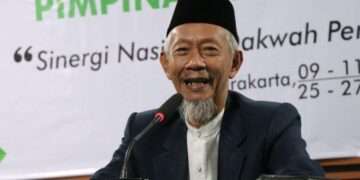
That was the view expressed by the Chairperson of the Central Board of Muhammadiyah, Saad Ibrahim on TVMu on Saturday (5/9). He said the principle of returning to the Quran and Sunnah must take into account the certainty of both the sources of religious teachings and their meanings. 

“One familiar expression among us is ar-ruju; ila al-Quran wa as-Sunnah. Returning to the Quran and Sunnah,” Saad said. 

Within Muhammadiyah, he added, the Islam conveyed by the Prophet Muhammad is understood through the Quran and accepted hadith (Sunnah). The term al-ahadis al-maqbulah, therefore, must be understood within the framework of hadith studies and the broader ‘ulum al-hadith tradition.

“There are maqbulah hadith, and of course there are mardudah hadith, or hadith that are rejected,” he said.  

Understanding the Certainty of Religious Souces 

Saad said two categories are important when determining the status of the Quran and hadith. The first concerns their transmission, known as wurud. The second concerns their meaning, or dalalah. 

In terms of wurud, the Quran is attributed to God, while hadith are attributed to the Prophet Muhammad. The Quran has an absolutely certain source, meaning all of its verses are classified as qat’i al-wurud. 

“The Quran is certainly from God. Therefore, every verse of the Quran falls into the category of qat’i al-wurud,” he said. 

Hadith, by contrast, have different levels of certainty in transmission. Mutawatir hadith have a high degree of certainty because they were transmitted by numerous narrators at every level of transmission. Ahad hadith do not reach the same level of certainty. 

Saad explained that ahad hadith can be classified as sahih, hasan, daif, and maudu.

“To make it easier to understand, sahih hadith are very likely to have originated from the Prophet. But again, very likely does not mean we can say with absolute certainty that they came from him,” he said. 

Hasan hadith have a lower level of acceptance than sahih hadith, while daif hadith rank below them. Maudu hadith, meanwhile, are explicitly regarded as fabrications and are not considered to have originated with the prophet. 

This distinction, Saad said, underscores the importance of examining how a hadith is attributed to the Prophet. Hadith do not refer only to his words, but to anything attributed to him, including his words, actions, approvals, and other reports. 

“Hadith are ma udifa ila an-Nabi sallallahu ‘alaihi wasallam min qaulin au fi’lin au taqririn au nahwiha. They are words, actions, approvals, and other things attributed to the Prophet,” he said. 

Between Wurud and Dalalah

Beyond the certainty of a source, Saad stressed the need to distinguish between qat‘i al-wurud dan qat‘i al-dalalah. Wurud concerns the certainty of a text’s source, while dalalah concerns the certainty of its meaning. 

He cited Quranic verses concerning the prohibition of usury, or riba. The Quran is certain in its source, making it qat’i al-wurud. Yet its interpretation may vary, as some texts have a definitive meaning while others allow more than one interpretation. 

“A meaning that is certainly correct is called qat’i al-dalalah,” he said. 

“These two dimensions create several possible positions in interpreting Islamic sources. 

The first is when a source is qat‘i al-wurud and its meaning is also qat‘i al-dalalah. Saad described this as the highest level of certainty because both the source and its meaning are definitive.

“When qat‘i al-wurud is combined with qat‘i al-dalalah, that is the highest position,” he said.

RelatedArticle

Abdul Mu’ti’s Books on Pluralism and Education Added to Oxford Library Collection

Muhammadiyah Cadres in Saudi Arabia Highlight Regional Security and Educational Opportunities

UMJT Madiun Opens Its Doors to Diversity as Christian Students Embrace Campus Orientation

In this area, Saad added, there is no room to alter or dispute a ruling that has been established with certainty.

When either the source or its meaning is less certain, however, the space for disagreement becomes wider.

He cited Quran 5:6, which discusses ablution, or wudu. The verse identifies several body parts that must be washed or wiped. Some scholars understand the essential elements of wudu as four: washing the face, washing the hands, wiping the head and washing the feet.

Others add intention and sequence, bringing the number to six. Some also include muwalah, or maintaining continuity between the successive steps of ablution.

Islam Provides Room for Various Reasonings

The example shows that although the Quran is definitive in its source, its meaning can sometimes be zanni al-dalalah, or open to interpretation. Therefore, differences over such matters have a legitimate place in Islamic scholarship.

Saad stressed that when an issue does not fall within both qat‘i al-wurud and qat‘i al-dalalah, Muslims have room to develop their own reasoning.

“As long as it does not fall within qat‘i al-wurud and then qat‘i al-dalalah, once again, we are given room to develop our ideas,” he said.

That room becomes even broader when an issue has no direct basis in the Quran or hadith. In such cases, scholars have used various methods of ijtihad and istinbat to derive rulings consistent with the principles of Islamic law.

Saad cited several methods found in the Islamic legal tradition, including qiyas (analogical reasoning), istihsan (juristic preference), maslahah mursalah (consideration of public benefit), sadd az-zara’i (blocking the means to harm), fath az-zara’i (opening the means to benefit), and ‘urf (custom).

“These are methods used by scholars in the Islamic intellectual tradition, particularly experts in usul al-fiqh, to engage in ijtihad,” he said.

For that reason, Saad argued, the further an issue lies from matters of definitive certainty, the greater the room should be for tolerance and legitimate differences of opinion.

“This is where there should be room for disagreement, and room to build tolerance should certainly be more open and more expansive,” he said.


Tags: DalalahQuranSaad IbrahimsunnahWurud
ShareTweetSendShareShare
Previous Post

Muhammadiyah Raises Rp6 Billion for NTT Earthquake Survivors, Serves 7,255 People

Next Post

Be Anything You Want, But Know Islam Well and Keep Learning

RelatedPosts

Ahead of Its 49th Congress, Muhammadiyah Prepares Treatise of Universality
Ideology

Ahead of Its 49th Congress, Muhammadiyah Prepares Treatise of Universality

31 August 2026
Kiai Saad Says Muhammadiyah’s Growth Reflects Divine Support
Education

Kiai Saad Says Muhammadiyah’s Growth Reflects Divine Support

2 June 2026
Is It Permissible to Observe the Sunnah Fast of Ayyam al-Bidh During the Days of Tashriq?
Islamic Law

Is It Permissible to Observe the Sunnah Fast of Ayyam al-Bidh During the Days of Tashriq?

27 May 2026
Al-Fatihah as a Guide to Life and the Core of Islamic Teachings
Figure

Al-Fatihah as a Guide to Life and the Core of Islamic Teachings

15 April 2026
Next Post
Be Anything You Want, But Know Islam Well and Keep Learning

Be Anything You Want, But Know Islam Well and Keep Learning

Muhammadiyah Is Not a Socialist Movement, but It Stands with the Common People

Muhammadiyah Is Not a Socialist Movement, but It Stands with the Common People

Muhammadiyah Praises Volunteers Who Left Their Jobs for Weeks to Serve NTT Disaster Survivors

Muhammadiyah Praises Volunteers Who Left Their Jobs for Weeks to Serve NTT Disaster Survivors

Populer News

  • Leader’s Profile: dr. H. Agus Taufiqurrahman

    Leader’s Profile: dr. H. Agus Taufiqurrohman, Sp.S., M.Kes.

    0 shares
    Share 0 Tweet 0
  • Man of Action, Man of Dialogue: The Legacy of KH Ahmad Dahlan

    0 shares
    Share 0 Tweet 0
  • Fatwa on Using Mirin in Cooking for Muslims in Japan

    0 shares
    Share 0 Tweet 0
  • Safa and Marwa: Uncovering the Historical Depths of Two Sacred Hills

    0 shares
    Share 0 Tweet 0
  • Is It Permissible for Muslims to Blow Out Birthday Candles?

    0 shares
    Share 0 Tweet 0
  • Leader’s Profile: Prof. Dr. Haedar Nashir, M.Si.

    0 shares
    Share 0 Tweet 0
  • Billions in Aid: Muhammadiyah Support for Palestine

    0 shares
    Share 0 Tweet 0
  • The Islamic Character of Lionel Messi

    0 shares
    Share 0 Tweet 0
  • PRIM and PRIA Klang Lama Mark a New Chapter for Muhammadiyah in Malaysia

    0 shares
    Share 0 Tweet 0
  • Leader’s Profile: Drs. H. A. Dahlan Rais, M.Hum.

    0 shares
    Share 0 Tweet 0

Council

  • Religious Opinion & Tajdid
  • Religious Preaching
  • Higher Education, Research, & Development
  • Elementary, Secondary, & Non-Formal Education
  • Cadre & Human Resources
  • Public Health
  • Social Welfare
  • Economy, Business, & Tourism
  • Waqf Utilization
  • Community Empowerment
  • Law and Human Rights
  • Enviromental Preservation
  • Publications & Information

Institutions

  • Islamic Boarding School
  • Branch & Mosque Development
  • Strategic Studies & Partnerships
  • Financial Supervision & Development
  • Disaster Management Center
  • Charity Management
  • Micro, Small, & Medium Enterprise
  • Politics & Public Policy
  • Arts & Culture
  • Sports & Development
  • International Relations & Cooperation
  • Community Da'wah
  • Halal Auditing & "Halalan Thayyiban" Studies
  • Hajj & Umroh
  • Legal Aid & Public Advocacy

Bureau

  • Organization Development
  • Financial Management
  • Communication & Public Services

Ortom

  • 'Aisyiyah Woman Association
  • Muhammadiyah Youth Association
  • Nasyiatul 'Aisyiyah Young Woman Association
  • Muhammadiyah University Student Association
  • Muhammadiyah Student Association
  • Muhammadiyah Tapak Suci Martial Arts
  • Muhammadiyah Hizbul Wathan Scouts

Sumatra Region

  • Nanggroe Aceh Darussalam
  • Sumatra Utara
  • Sumatra Selatan
  • Sumatra Barat
  • Bengkulu
  • Riau
  • Kepulauan Riau
  • Jambi
  • Bangka Belitung

Kalimantan Region

  • Kalimantan Barat
  • Kalimantan Timur
  • Kalimantan Selatan
  • Kalimantan Tengah
  • Kalimantan Utara

Jawa Region

  • D.I. Yogyakarta
  • Banten
  • DKI Jakarta
  • Jawa Barat
  • Jawa Tengah
  • Jawa Timur

Bali & Kepulauan Nusa Tenggara

Region

  • Bali
  • Nusa Tenggara Barat
  • Nusa Tenggara Timur

Sulawesi Region

  • Gorontalo
  • Sulawesi Barat
  • Sulawesi Tengah
  • Sulawesi Utara
  • Sulawesi Tenggara
  • Sulawesi Selatan

Maluku dan Papua Region

  • Maluku Utara
  • Maluku
  • Papua
  • Papua Barat
  • Papua Barat daya

Special Branch

  • Kairo Mesir
  • Iran
  • Sudan
  • Belanda
  • Jerman
  • United Kingdom
  • Libya
  • Malaysia
  • Prancis
  • Amerika Serikat
  • Jepang
  • Tunisia
  • Pakistan
  • Australia
  • Rusia
  • Taiwan
  • Tunisia
  • TurkI
  • Korea Selatan
  • Tiongkok
  • Arab Saudi
  • India
  • Maroko
  • Yordania
  • Yaman
  • Spanyol
  • Hongaria
  • Thailand
  • Kuwait
  • New Zealand

Category

  • Education
  • Health
  • Economy
  • Humanity
  • Religion
  • Law & Politics
  • Ideology
  • Culture
  • Media

About

  • History
  • Brand Guideline

Services

  • Information

Apps

  • Muhammadiyah ID
  • MASA
  • EventMu
  • BukuMu
  • SehatMu
  • KaderMu
  • LabMu

More Information

  • Editorial
  • Contact
  • Privacy Policy
© 2024 Persyarikatan Muhammadiyah

Welcome Back!

Login to your account below

Forgotten Password?

Retrieve your password

Please enter your username or email address to reset your password.

Log In

Add New Playlist

No Result
View All Result
  • icon bendera arab
  • bendera indonesia
  • EDUCATION
  • HEALTH
  • ECONOMY
  • HUMANITY
  • OTHERS
    • RELIGION
    • LAW & POLITICS
    • IDEOLOGY
    • SOCIO-CULTURE
    • ENVIRONMENT
    • MEDIA
  • Login

© 2024 Persyarikatan Muhammadiyah - Cahaya Islam Berkemajuan.