

MUHAMMADIYAH.OR.ID, YOGYAKARTA – On November 18, 2025, Muhammadiyah marks its 113th milad (anniversary) since its establishment in 1912. This year, the organization adopts the theme “Advancing the Nation’s Welfare.”
The President of Muhammadiyah Central Board, Haedar Nashir, explained the meaning behind this year’s theme. First, through its movement Muhammadiyah continues to strengthen and expand its efforts to improve the public welfare, emphasizing not only social and economic well-being but also spiritual and moral prosperity, so that public welfare could be achieved holistically.
Second, Muhammadiyah remains committed to support and encourage government policies aimed at shaping public welfare in line with the mandate of the 1945 Constitution. This includes ensuring that welfare is felt more evenly across the country, as reflected in the fifth principle of Pancasila: Social justice for all Indonesian people.
Haedar also noted that this year’s milad takes place amid complex national dynamics, demanding for collective awareness and continuous effort to achieve Indonesia’s national ideals: “a nation that is truly independent, united, sovereign, just, and prosperous.“
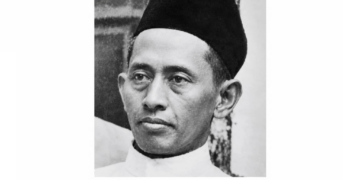
Since its establishment, Muhammadiyah has actively taken part in the Kebangkitan Nasional (National Awakening Movement) for independence and contributed to the establishment and development of the Republic of Indonesia. Today, the organization reaffirmed its national commitment, which is rooted in Islamic values, to achieve Indonesia’s goals in line with the vision of “Baldatun thayyibatun wa rabbun ghafur,” meaning, a country that is beautiful, pure. prosperous, and under the protection of the Most Forgiving God.
Haedar emphasized that Muhammadiyah is deeply committed to advancing the nation’s welfare, both materially and spiritually. In the Muqaddimah (preamble) of The Statute of Muhammadiyah, which serves as a fundamental principle of Muhammadiyah movement, it is stated: “A prosperous, secure, peaceful, and happy society can only come true on the basis of justice, honesty, brotherhood, and mutual cooperation, helping one another upon the foundation of God’s divine law, free from the influence of evil and humanly desires.”
The same spirit is also reflected in the Corpus of Creed and Life Goals of Muhammadiyah, a philosophical framework of the organization. It declares: “Muhammadiyah believes that Islam is the religion of God revealed to His messengers, from Prophet Adam, Noah, Abraham, Moses, and Jesus, to the final Prophet Muhammad (peace be upon him), as guidance and mercy for humanity across time, ensuring both material and spiritual well-being, in this world and the hereafter.”
Among Muhammadiyah’s sixteen major programs, several directly addressed public welfare. These include: “(6) empowering women in education, health, economy, and social welfare; . . . (8) strengthening the economy and entrepreneurship to improve quality of life; (9) enhancing public health, humanitarian aid, and social welfare; (10) preserving, developing, and utilizing natural resources and the environment for the benefit of society, . . . “
Haedar further explained that the concept of kesejahteraan (welfare) or sejahtera (prosperous) carries a profound and wide-ranging meaning. Linguistically, it refers to “a state of well-being: safety, security, and peace of mind.” While, according to Haedar, Welfare can be understood in four different contexts. In general terms, it refers to a good condition where people live in prosperity, health, and peace. In economics, it is associated with material benefits and is recognized as a formal, technical concept (see welfare economics). In social policy, “social welfare” refers to the range of services designed to meet societal needs.
“Meanwhile, Muhammadiyah places the idea of welfare in the context of nation’s life, which possesses a strong substantial connection to the constitutional mandate set forth in the preamble of the 1945 Constitution: “to promote nation’s welfare,” Haedar explained.
He also stressed that, after independence, Indonesia must ensure that welfare is advanced equitably for all citizens, not only limited to certain groups, and especially not for a privileged few. Given the persistent problem of socio-economic inequality, Haedar urged the government to implement strategic and practical policies to achieve broad and inclusive welfare for all Indonesians. (Bintang Ardiansah)