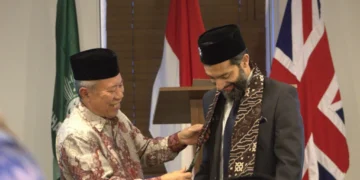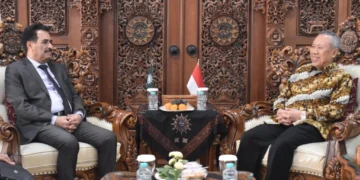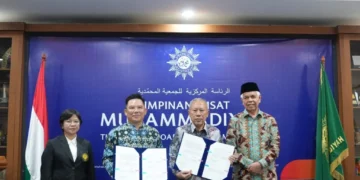


EN.MUHAMMADIYAH.OR.ID, VATICAN– Muhammadiyah and the Vatican have agreed to strengthen interfaith humanitarian diplomacy through a new international partnership aimed at addressing the growing impact of what both sides describe as “economic war.”

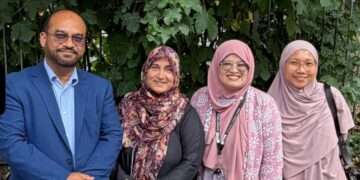
The agreement emerged during an official meeting at the Vatican on May 5 between a Muhammadiyah delegation and Cardinal George Jacob Koovakad, Perfect of the Dicastery for Interreligious Dialogue. The delegation also included representatives from Muhammadiyah University of Yogyakarta.
According to Muhammadiyah leaders, the partnership seeks to encourage cooperation among religious organizations across traditions in response to worsening humanitarian crises linked to economic and geopolitical conflicts around the world.
Bachtiar Dwi Kurniawan, Chairperson of Muhammadiyah Central Board’s Council for Cadre Development and Human Resource Development, described the meeting as historically significant.
“This was a meeting between the Vatican as a state and Muhammadiyah as an Islamic organization,” Bachtiar said. “It may become the first formal cooperation between a sovereign state and an Islamic mass organization from Indonesia.”
Focus on Humanitarian and Educational Programs
As a concrete follow-up, Muhammadiyah and the Vatican agreed to establish a joint drafting team consisting of five Muhammadiyah representatives. The team will prepare a Memorandum of Understanding that will guide future international programs. The partnership will draw inspiration from the Istiqlal Declaration 2024 and will focus primarily on two areas: humanitarian engagement and education.
Furthermore, Bachtiar explained that the Vatican operates under strict diplomatic procedures. Therefore, every cooperation document must undergo administrative review as well as legal and institutional evaluation from both parties.
Global Concerns over Economic Conflict
Meanwhile, UMY Rector Achmad Nurmandi said the proposed coalition would involve structured cooperation among Muhammadiyah, the Vatican, and other international religious institutions. According to Nurmandi, the coalition plans to coordinate advocacy efforts, deliver peace-oriented public messages, and organize humanitarian programs across countries.
He added that Cardinal Koovakad expressed serious concern over the current global geopolitical climate. Several issues, he said, dominated the discussions. Among them were the weakening authority of the United Nations, growing disregard for international law, and the actions of major powers that often disadvantage militarily weaker nations.
“The Cardinal emphasized the need for a collective movement to stop economic wars around the world,” Nurmandi said. “These conflicts continue to create suffering for humanity, especially for women and children,” he concluded. (bhisma)