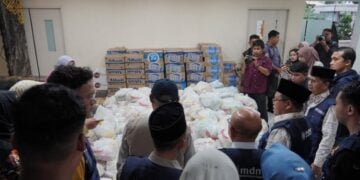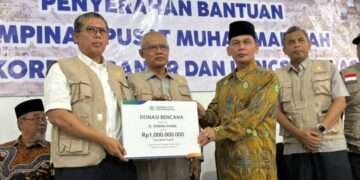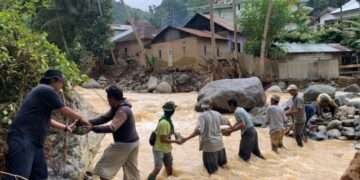


MUHAMMADIYAH.OR.ID, YOGYAKARTA – Muhammadiyah would accompany survivors of recent floods and landslides in Aceh and parts of Sumatra through the full recovery process, not only during the emergency responses.

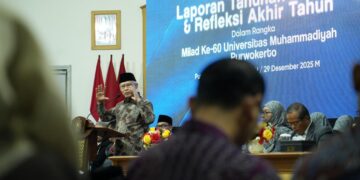
The commitment was made during a coordination meeting between the Central Board of Muhammadiyah (PP Muhammadiyah) and rectors from Muhammadiyah-’Aisyiyah Universities (PTMA) across Indonesia. The meeting took place on Tuesday (23/12) at the organization’s headquarters in Yogyakarta.
Universities Coordinate Aid Strategy
The meeting brought together university leaders, including rectors from disaster-affected regions, to discuss follow-up strategies for humanitarian assistance in Aceh, West Sumatra, and North Sumatra.
Rectors from impacted areas first reported on conditions on site. They outlined what had been done, what remained unfinished and what resources were still lacking. The discussion then shifted toward defining the strategic role of Muhammadiyah’s higher education institutions in future relief efforts.
“We must intensify our efforts,” said Haedar Nashir, President of Muhammadiyah Central Board. He urged university leaders to mobilize their collective strength to help communities in Sumatra.
Aid Must Extend Beyond Emergency Response
Haedar stressed that Muhammadiyah’s responsibility does not end when the emergency phase concludes. He warned against spending all available funds during short-term response efforts.
“Do not exhaust the funds during the emergency period,” he said. “Resources must be prepared for the next stages, including post-disaster recovery.”
He added that Muhammadiyah should remain at the forefront of humanitarian work as part of its mission to serve humanity. At the same time, he cautioned against careless public communication, which could worsen the emotional burden on affected communities.
“We must not create new anxiety,” he said. “Let us untangle this crisis with sincerity.”
Campuses as Centers of Recovery
Agus Taufiqurrahman, Chairperson of PP Muhammadiyah who moderated the meeting, said Muhammadiyah universities should become places of refuge and support for the public.
He expressed confidence that academic communities would actively raise funds and contribute through various programs. These include community service initiatives, student fieldwork programs and other forms of civic engagement.
Agus also emphasized the importance of sustained academic research aligned with Muhammadiyah’s long-term humanitarian mission.
Supporting Government Disaster Response
Agung Danarto, another Chairperson of PP Muhammadiyah, reaffirmed Muhammadiyah’s commitment to cooperating with the government in disaster management efforts.
He cited the organization’s guiding principles which call for collaboration with state institutions and other groups to build a just and prosperous society.
“In the context of the Sumatra disasters, our focus must remain on helping affected communities,” Agung said. “When it comes to disaster response, we must act with full seriousness and dedication.” (Janu) (Translated by Bintang Adrian)