Thursday, October 1, 2026
  • AR
  • ENG
  • IDN
Muhammadiyah Media
  • EDUCATION
  • HEALTH
  • ECONOMY
  • HUMANITY
  • OTHERS
    • RELIGION
    • LAW & POLITICS
    • IDEOLOGY
    • SOCIO-CULTURE
    • ENVIRONMENT
    • MEDIA
No Result
View All Result
  • Login
Muhammadiyah Media
  • EDUCATION
  • HEALTH
  • ECONOMY
  • HUMANITY
  • OTHERS
    • RELIGION
    • LAW & POLITICS
    • IDEOLOGY
    • SOCIO-CULTURE
    • ENVIRONMENT
    • MEDIA
No Result
View All Result
  • Login
Muhammadiyah Media
No Result
View All Result
  • EDUCATION
  • HEALTH
  • ECONOMY
  • HUMANITY
  • OTHERS
Home Islamic Law

Preserving the Purity of Monotheism in Shawwal: Lessons from the Tradition of Grave Visitation

by Persyarikatan Muhammadiyah
6 months ago
in Islamic Law, News, Religion
Reading Time: 3 mins read
A A
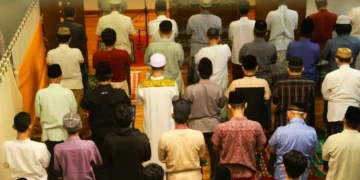
Muhammad Arifuddin, a member of the Tarjih and Tajdid Council of Muhammadiyah Central Board, emphasized the importance of preserving the purity of tauhid (the oneness of Allah) in the life of every Muslim. His remarks came during a sermon held at KH Sudja Mosque on Wednesday (8/4). He was particularly addressing the widespread tradition of grave visitation during the month of Shawwal. 

Muhammad Arifuddin, a member of the Tarjih and Tajdid Council of Muhammadiyah Central Board, emphasized the importance of preserving the purity of tauhid (the oneness of Allah) in the life of every Muslim. His remarks came during a sermon held at KH Sudja Mosque on Wednesday (8/4). He was particularly addressing the widespread tradition of grave visitation during the month of Shawwal. 

MUHAMMADIYAH.OR.ID, SLEMAN — Muhammad Arifuddin, a member of the Tarjih and Tajdid Council of Muhammadiyah Central Board, emphasized the importance of preserving the purity of tauhid (the oneness of Allah) in the life of every Muslim. His remarks came during a sermon held at KH Sudja Mosque on Wednesday (8/4). He was particularly addressing the widespread tradition of grave visitation during the month of Shawwal. 

At the beginning of his sermon, Arifuddin called on the congregation to remain grateful for the blessings of health and the opportunity to gather in a place of worship. He cited a verse from the Qur’an:

“Those who have believed and whose hearts are assured by the remembrance of Allah. Unquestionably, by the remembrance of Allah hearts are assured.” (QS. Ar-Ra’d: 28).

According to him, inner peace stands as one of the ultimate goals of human life. Therefore, he stressed that such tranquility can only be achieved through frequent remembrance of God and by strengthening one’s spiritual connection with Him.

As the month of Shawwal follows Ramadan, Arifuddin highlighted the importance of continuity in worship, particularly through prayers that one’s good deeds are accepted. He referred to the supplication of Prophets Ibrahim and Ismail during the construction of the Kaaba: 

“Our Lord, accept [this] from us. Indeed You are the Hearing, the Knowing.” (QS. Al-Baqarah: 127).

“The spirit must be preserved,” he said. “After performing good deeds, we must continue to ask Allah for their acceptance.” 

Grave Visitation: Permissible but Purposeful

Ariffudin then addressed a common societal practice, linking Shawwal with routine grave visitation, often performed shortly after the Eid al-Fitr prayer. He clarified that visiting grave is permissible in Islam, as reflected in the saying of the Prophet Muhammad PBUH: 

“I had forbidden you from visiting graves, but now visit them.” (Reported by Muslim)

However, he underscored that this permission carries a specific purpose: to remember death and to pray for those who have passed away. It should not involve seeking favors or assistance from the deceased. 

He warned against excessive reverence toward graves that could lead to shirk (associating God with other beings), such as making special journeys to certain graves with the intention of asking for personal needs. Islam, he emphasized, firmly blocks all paths that may lead to such deviations. 

To support this, he cited verses from the Qur’an: 

“Do they associate with Him those who create nothing and they are [themselves] created? And the false deities are unable to give them help, nor can they help themselves.” (QS. Al-A’raf: 191-192)

According to Arifuddin, these verses clearly affirm that anything besides Allah is created beings without power, and therefore unworthy of reliance. 

He further referenced another passage: 

“And those you invoke besides Him do not possess [as much as] the membrane of a date seed. If you invoke them, they do not hear your supplication. And if they heard, they would not respond to you. And on the Day of Resurrection they will deny your association.” (QS. Fatir: 13-14)

He explained that even the most revered beings lack the ability to hear, let alone answer, human prayers. 

A Reminder from the Prophet’s Life

Arifuddin also recalled an incident from the Battle of Uhud, when the Prophet Muhammad PBUH was injured. Over his injury he said: “How can a people succeed who wound their Prophet?”

RelatedArticle

Muhammadiyah Strengthens Peace Diplomacy in the Bangsamoro Peace Process

PCIM Tunisia Expands as Muhammadiyah Seeks to Broaden Study Opportunities for Cadres

Muhammadiyah Opens Opportunities for Islamic Education Cooperation with Cambodia

In response, Allah revealed: “Not for you [Muhammad], is the decision whether He should [cut them down] or forgive them or punish them; indeed, they are wrongdoers.” (QS. Ali Imran: 128)

This verse, he noted, demonstrates that even the Prophet himself did not possess authority over all matters, as ultimate control belongs solely to Allah. 

In closing, Arifuddin reiterated that grave visitation should serve as a means of self-reflection, 

“The purpose of visiting graves is only twofold: to remember death and to pray for the deceased–not to ask from them,” he stressed. 

He urged the congregation to safeguard the purity of tauhid and to avoid practices that may lead to shirk, ensuring that all acts of worship remain sincere and acceptable in the sight of Allah Subhanahu wa Ta’ala. 

Tags: jurisprudencetauhid
ShareTweetSendShareShare
Previous Post

Is It Permissible to Sell Goods or Food With Cash Prizes?

Next Post

U.K. Ambassador Praises Muhammadiyah’s Character Education

RelatedPosts

What is the Prayer for Rain? The Prophet’s Supplication during Drought
Islamic Law

What is the Prayer for Rain? The Prophet’s Supplication during Drought

24 September 2026
If a Masbuq Joins During the Imam’s Bowing, Must They Still Recite Al-Fatihah?
Islamic Law

If a Masbuq Joins During the Imam’s Bowing, Must They Still Recite Al-Fatihah?

4 September 2026
Different Forms of Worship Share the Same Prophetic Foundation, Muslims Must Not Judge One Another
Islamic Law

Different Forms of Worship Share the Same Prophetic Foundation, Muslims Must Not Judge One Another

14 August 2026
Can an Imam Lead Congregational Prayer While Seated?
Islamic Law

Can an Imam Lead Congregational Prayer While Seated?

5 August 2026
Next Post
U.K. Ambassador Praises Muhammadiyah’s Character Education

U.K. Ambassador Praises Muhammadiyah’s Character Education

Muhammadiyah Delivers Aid to Palestinian Child Cancer Survivors in Jordan

Muhammadiyah Delivers Aid to Palestinian Child Cancer Survivors in Jordan

Haedar Nashir Calls on Student Movement to Stay Progressive in a Fragmenting World

Haedar Nashir Calls on Student Movement to Stay Progressive in a Fragmenting World

Populer News

  • Halal Certification in Australia: Challenges and Opportunities

    Fatwa on Using Mirin in Cooking for Muslims in Japan

    0 shares
    Share 0 Tweet 0
  • Is It Permissible for Muslims to Blow Out Birthday Candles?

    0 shares
    Share 0 Tweet 0
  • The Islamic Character of Lionel Messi

    0 shares
    Share 0 Tweet 0
  • Man of Action, Man of Dialogue: The Legacy of KH Ahmad Dahlan

    0 shares
    Share 0 Tweet 0
  • Safa and Marwa: Uncovering the Historical Depths of Two Sacred Hills

    0 shares
    Share 0 Tweet 0
  • Leader’s Profile: Drs. H. A. Dahlan Rais, M.Hum.

    0 shares
    Share 0 Tweet 0
  • Leader’s Profile: dr. H. Agus Taufiqurrohman, Sp.S., M.Kes.

    0 shares
    Share 0 Tweet 0
  • Leader’s Profile: Prof. Dr. Haedar Nashir, M.Si.

    0 shares
    Share 0 Tweet 0
  • Can One Animal Serve Both Aqiqah and Qurban? 

    0 shares
    Share 0 Tweet 0
  • Leader’s Profile: M. Sayuti, M.Pd., M.Ed., Ph.D.

    0 shares
    Share 0 Tweet 0

Council

  • Religious Opinion & Tajdid
  • Religious Preaching
  • Higher Education, Research, & Development
  • Elementary, Secondary, & Non-Formal Education
  • Cadre & Human Resources
  • Public Health
  • Social Welfare
  • Economy, Business, & Tourism
  • Waqf Utilization
  • Community Empowerment
  • Law and Human Rights
  • Enviromental Preservation
  • Publications & Information

Institutions

  • Islamic Boarding School
  • Branch & Mosque Development
  • Strategic Studies & Partnerships
  • Financial Supervision & Development
  • Disaster Management Center
  • Charity Management
  • Micro, Small, & Medium Enterprise
  • Politics & Public Policy
  • Arts & Culture
  • Sports & Development
  • International Relations & Cooperation
  • Community Da'wah
  • Halal Auditing & "Halalan Thayyiban" Studies
  • Hajj & Umroh
  • Legal Aid & Public Advocacy

Bureau

  • Organization Development
  • Financial Management
  • Communication & Public Services

Ortom

  • 'Aisyiyah Woman Association
  • Muhammadiyah Youth Association
  • Nasyiatul 'Aisyiyah Young Woman Association
  • Muhammadiyah University Student Association
  • Muhammadiyah Student Association
  • Muhammadiyah Tapak Suci Martial Arts
  • Muhammadiyah Hizbul Wathan Scouts

Sumatra Region

  • Nanggroe Aceh Darussalam
  • Sumatra Utara
  • Sumatra Selatan
  • Sumatra Barat
  • Bengkulu
  • Riau
  • Kepulauan Riau
  • Jambi
  • Bangka Belitung

Kalimantan Region

  • Kalimantan Barat
  • Kalimantan Timur
  • Kalimantan Selatan
  • Kalimantan Tengah
  • Kalimantan Utara

Jawa Region

  • D.I. Yogyakarta
  • Banten
  • DKI Jakarta
  • Jawa Barat
  • Jawa Tengah
  • Jawa Timur

Bali & Kepulauan Nusa Tenggara

Region

  • Bali
  • Nusa Tenggara Barat
  • Nusa Tenggara Timur

Sulawesi Region

  • Gorontalo
  • Sulawesi Barat
  • Sulawesi Tengah
  • Sulawesi Utara
  • Sulawesi Tenggara
  • Sulawesi Selatan

Maluku dan Papua Region

  • Maluku Utara
  • Maluku
  • Papua
  • Papua Barat
  • Papua Barat daya

Special Branch

  • Kairo Mesir
  • Iran
  • Sudan
  • Belanda
  • Jerman
  • United Kingdom
  • Libya
  • Malaysia
  • Prancis
  • Amerika Serikat
  • Jepang
  • Tunisia
  • Pakistan
  • Australia
  • Rusia
  • Taiwan
  • Tunisia
  • TurkI
  • Korea Selatan
  • Tiongkok
  • Arab Saudi
  • India
  • Maroko
  • Yordania
  • Yaman
  • Spanyol
  • Hongaria
  • Thailand
  • Kuwait
  • New Zealand

Category

  • Education
  • Health
  • Economy
  • Humanity
  • Religion
  • Law & Politics
  • Ideology
  • Culture
  • Media

About

  • History
  • Brand Guideline

Services

  • Information

Apps

  • Muhammadiyah ID
  • MASA
  • EventMu
  • BukuMu
  • SehatMu
  • KaderMu
  • LabMu

More Information

  • Editorial
  • Contact
  • Privacy Policy
© 2024 Persyarikatan Muhammadiyah

Welcome Back!

Login to your account below

Forgotten Password?

Retrieve your password

Please enter your username or email address to reset your password.

Log In

Add New Playlist

No Result
View All Result
  • icon bendera arab
  • bendera indonesia
  • EDUCATION
  • HEALTH
  • ECONOMY
  • HUMANITY
  • OTHERS
    • RELIGION
    • LAW & POLITICS
    • IDEOLOGY
    • SOCIO-CULTURE
    • ENVIRONMENT
    • MEDIA
  • Login

© 2024 Persyarikatan Muhammadiyah - Cahaya Islam Berkemajuan.