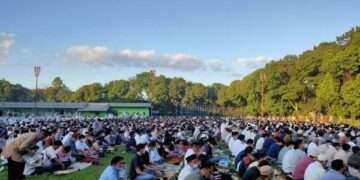


One of the most visible hallmarks of Ramadan is the nightly Tarawih prayer. Across mosques worldwide, Muslims gather after the evening prayer to observe this devotion with humility and focus. The atmosphere reflects spiritual longing as well as communal warmth.

A recurring question emerges: which is more virtuous, performing Tarawih individually or in congregation?
The majority of classical Islamic jurists agree that Tarawih brings greater merit when performed in congregation, although praying alone remains valid. Their view rests on the practice of the Prophet’s companions and on authentic traditions from the Prophet Muhammad.
The Narration of ‘Aisyah
The primary evidence comes from a narration by ‘Aisyah, one of the Mothers of the Believers. She reported:
عَنْ عَائِشَةَ رَضِيَ اللَّهُ عَنْهَا أَنَّ رَسُولَ اللَّهِ صَلَّى اللَّهُ عَلَيْهِ وَسَلَّمَ صَلَّى ذَاتَ لَيْلَةٍ فِي الْمَسْجِدِ فَصَلَّى بِصَلَاتِهِ نَاسٌ، ثُمَّ صَلَّى مِنَ الْقَابِلَةِ فَكَثُرَ النَّاسُ، ثُمَّ اجْتَمَعُوا مِنَ اللَّيْلَةِ الثَّالِثَةِ أَوِ الرَّابِعَةِ فَلَمْ يَخْرُجْ إِلَيْهِمْ رَسُولُ اللَّهِ صَلَّى اللَّهُ عَلَيْهِ وَسَلَّمَ، فَلَمَّا أَصْبَحَ قَالَ: «قَدْ رَأَيْتُ الَّذِي صَنَعْتُمْ، وَلَمْ يَمْنَعْنِي مِنَ الْخُرُوجِ إِلَيْكُمْ إِلَّا أَنِّي خَشِيتُ أَنْ تُفْرَضَ عَلَيْكُمْ»، وَذَلِكَ فِي رَمَضَانَ
“From ‘Aisyah (may Allah be pleased with her): The Messenger of Allah prayed one night in the mosque, and some people prayed with him. On the following night, he prayed again and more people gathered. Then they assembled on the third or fourth night, but the Messenger of Allah did not come out to them. In the morning, he said: ‘I saw what you did, and nothing prevented me from coming out to you except that I feared it would be made obligatory upon you.’ And that occurred in Ramadan.”
This narration appears in major hadith collections, including those compiled by Muhammad al-Bukhari and Muslim ibn al-Hajjaj, as well as others.
Importantly, the Prophet did not stop leading the prayer because congregational worship lacked merit. Rather, he sought to protect his community from hardship. Therefore, the reason was situational, not theological. The narration clearly indicates that praying Tarawih in congregation holds virtue.
The Report of Abu Dharr
Another narration reinforces this understanding. Abu Dharr reported:
عَنْ أَبِي ذَرٍّ قَالَ: صُمْنَا مَعَ رَسُولِ اللَّهِ صَلَّى اللَّهُ عَلَيْهِ وَسَلَّمَ فِي رَمَضَانَ، فَلَمْ يَقُمْ بِنَا شَيْئًا مِنَ الشَّهْرِ حَتَّى بَقِيَ سَبْعٌ، فَقَامَ بِنَا حَتَّى ذَهَبَ ثُلُثُ اللَّيْلِ، ثُمَّ لَمْ يَقُمْ بِنَا فِي السَّادِسَةِ، وَقَامَ بِنَا فِي الْخَامِسَةِ حَتَّى ذَهَبَ شَطْرُ اللَّيْلِ، فَقُلْنَا: يَا رَسُولَ اللَّهِ لَوْ نَفَّلْتَنَا قِيَامَ هَذِهِ اللَّيْلَةِ، فَقَالَ: «إِنَّهُ مَنْ قَامَ مَعَ الْإِمَامِ حَتَّى يَنْصَرِفَ كُتِبَ لَهُ قِيَامُ لَيْلَةٍ».
“We fasted Ramadan with the Messenger of Allah. He did not lead us in night prayer until seven nights remained. Then he led us until one-third of the night had passed. He did not lead us on the sixth night, but he led us on the fifth night until half the night had passed. We said, ‘O Messenger of Allah, if only you would continue leading us in prayer for the rest of this night.’ He replied: ‘Whoever stands in prayer with the imam until he finishes, it will be recorded for him as if he spent the whole night in prayer.’”
This report appears in collections such as that of Al-Tirmidhi and others.
A Practice Affirmed by the Companions
Taken together, these traditions present a consistent message. Congregational Tarawih carries greater merit, though individual prayer remains permissible. Moreover, praying together strengthens unity and revives a visible symbol of faith.
The practice gained further clarity during the caliphate of Umar ibn al-Khattab. He gathered Muslims under one imam for Tarawih in the mosque, and the companions supported his decision. Consequently, congregational Tarawih became a lasting tradition throughout Islamic history.
Thus, while personal devotion always retains value, congregational Tarawih reflects prophetic guidance and communal solidarity.