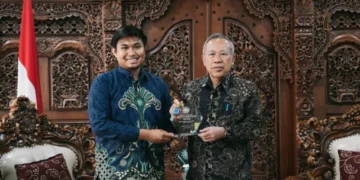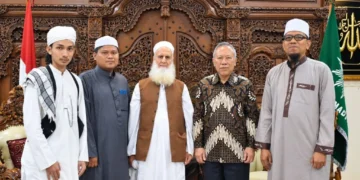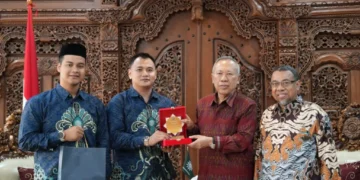

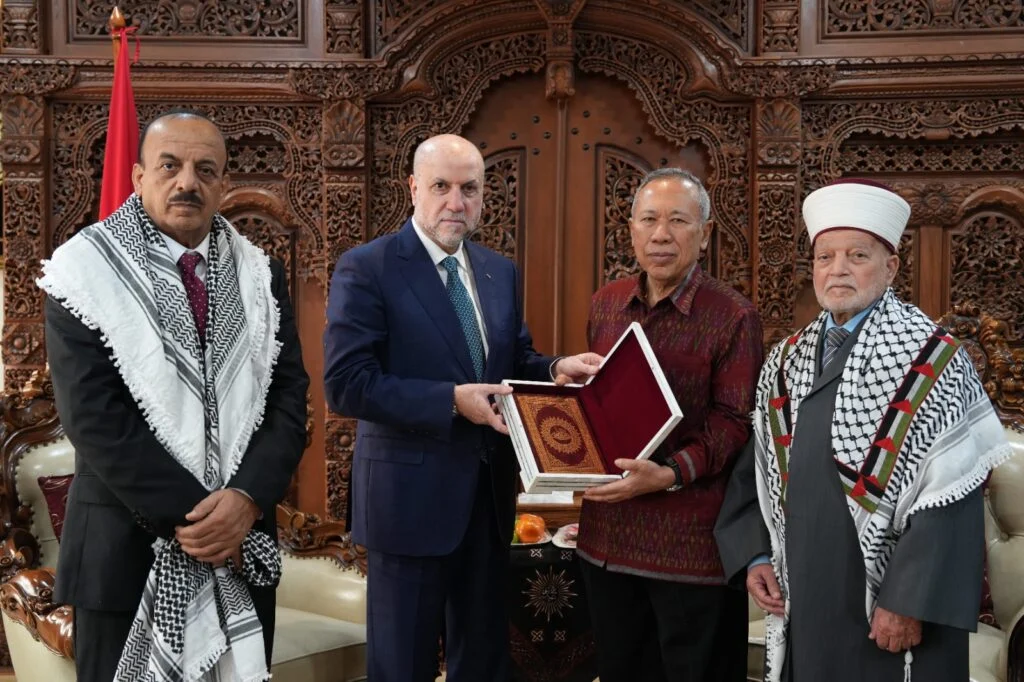
EN.MUHAMMADIYAH.OR.ID, JAKARTA — The Central Board of Muhammadiyah received Palestinian delegation on Monday (29/9), including Mahmoud Sidqi Al-Habbash, Adviser to the Palestinian President on Religious Affairs; Abdulfattah A.K. Al-Sattiri, the Palestinian ambassador to Indonesia; and Sheikh Mohammad A.M. Hussein, Imam of Al-Aqsa Mosque.

Syafiq A. Mughni, Chairperson of the Central Board of Muhammadiyah, received the delegation at its headquarters in Central Jakarta.
The meeting discussed developments in Palestine and the wider Middle East, as well as issues related to efforts to advance peace in the region.
Syafiq said the Palestinian delegation provided an update on the current situation in Palestine and conveyed its hopes for continued support and cooperation with Muhammadiyah.
“They visited the Muhammadiyah Central Board office to share information about the current situation in Palestine and the broader situation in the Middle East, as well as their hopes for Muhammadiyah,” Syafiq said.
The delegation also expressed appreciation for Muhammadiyah’s efforts in recent years and hoped the existing cooperation could continue.
“They appreciated what Muhammadiyah has done so far and want that cooperation to continue,” Syafiq said.
Discussing New Peace Mechanisms
The meeting also touched on several issues that have recently drawn public attention, including the Abraham Accords and the Board of Peace. The two issues formed part of a broader discussion about the dynamics of peace efforts and politics in the Middle East.
The meeting also touched on several issues that have recently drawn public attention, including the Abraham Accords and the Board of Peace. The two issues formed part of a broader discussion about the dynamics of peace efforts and politics in the Middle East.
According to Syafiq, the discussion did not indicate any significant change in the situation in Palestine following the establishment of various new institutions and mechanisms intended to address the conflict.
“From the discussion, it appears that it is still unclear what has actually been accomplished by these institutions. The situation remains much the same as it was before they were established. So, perhaps we cannot expect too much from what institutions of this kind can do,” he said. (Taufik)