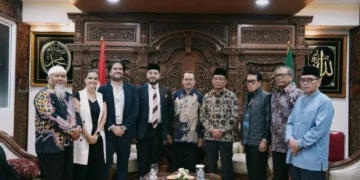


MUHAMMADIYAH.OR.ID, JAKARTA – The Central Board of Muhammadiyah welcomed a visit from the Assistant Secretary-General of the Organization of Islamic Cooperation (OIC), who also serves as the OIC Secretary-General’s Special Envoy for Afghanistan, Tarig Ali Bakheet, at the Muhammadiyah Dakwah Building in Menteng Raya, Central Jakarta.

The delegation was received directly by Syafiq A. Mughni, Chairperson of the Central Board of Muhammadiyah, along with Muhammadiyah Chairperson Saad Ibrahim and the Indonesian Ulema Council (MUI) Chairperson for International Relations, Bunyan Saptomo.
In his remarks, Syafiq emphasized the importance of cooperation between the two parties. He noted that Muhammadiyah, with its central role in contributing to global issues, must continue to expand and strengthen its network of partnerships. .
“Assistance for Afghanistan is crucial. As a socio-religious organization, Muhammadiyah will contribute to developing and empowering the Afghan people, whether through the Indonesian Embassy or the OIC,” he explained on Friday (14/11).
Syafiq added that Muhammadiyah has long provided scholarship assistance for students from Palestine and Afghanistan. This reflects Muhammadiyah’s firm commitment to continued engagement in global education and humanitarian efforts.
Meanwhile, Tarig Ali Bakheet, making his second visit to Muhammadiyah Central Office, expressed his appreciation, support, and warm reception for this friendship visit.
Tarig emphasized that the OIC will consistently promote religious moderation, strengthen cooperation and positively empower Muslim communities.
“We are very proud of Muhammmadiyah’s contributions across the region. This meeting is an opportunity to strengthen OIC-Muhammadiyah relations in all sectors, including women’s empowerment, governance, and support for Muslim communities and organizations,” he said.
This meeting proceeded warmly and marked an important movement in strengthening cooperation and collaboration between the OIC and Muhammadiyah, particularly in assisting the Afghan people and vulnerable groups such as women and children. (Bintang Adrian)