

MUHAMMADIYAH.OR.ID, YOGYAKARTA — Muhammadiyah Chairperson, Agus Taufiqurrohman called on Muslims to treat the Hajj pilgrimage and the ritual of sacrifice during Eid al-Adha as opportunities to deepen both piety and social concern.

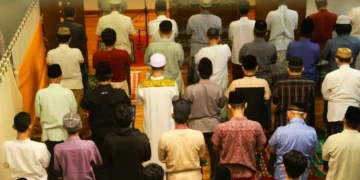
He delivered the message during a Friday prayer sermon at Muhammadiyah University of Yogyakarta on Friday (8/5).
In his sermon, Agus referred to the departure of hundreds of thousands of Indonesian pilgrims to Saudi Arabia this year. According to him, around 221,000 Indonesians are performing the Hajj pilgrimage, including approximately 203,000 regular pilgrims and the rest participants in special Hajj programs.
“We should be grateful when we become guests of Allah, and hopefully all of us will one day receive that opportunity,” he said.
Agus emphasized that Hajj remains an obligation only for Muslims who possess istitha’ah or the physical and financial capability to undertake the pilgrimage. He cited the Qur’anic verse: “Walillahi ‘alan nasi hijjul baiti manis tathaa’a ilaihi sabiila.” It means “Pilgrimage to the House is a duty owed to Allah by those who are able to undertake it.”
Moreover, he explained the immense spiritual significance of Hajj. He quoted a saying of the Prophet Muhammad stating that no day brings more divine forgiveness than the Day of Arafah, when pilgrims gather in prayer during the climax of Hajj.
Agus also recalled another prophetic tradition that says pilgrims who avoid obscene speech and sinful behavior during Hajj return home as pure as newborn children.
Spiritual Achievement Must Shape Social Conduct
Although many muslim view Hajj as a deeply personal spiritual experience, Agus stressed that the true meaning of a mabrur Hajj extends far beyond individual devotion. He quoted the well-known hadith: “Alhajju mabrur laisa lahu jaza’ illal jannah.” It means “A mabrur Hajj has no reward except jannah (Paradise).”
However, he argued that the quality of a successful hajj should appear in a person’s actions after returning home. “A mabrur Hajj is marked by generosity, by feeding others, helping people, and sharing with those in need,” Agus said. “It is also reflected in gentle and courteous speech.”
According to him, the term mabrur should not only signify spiritual acceptance by God. Instead, it should also describe a transformation that produces kindness and positive influence within society.
Furthermore, Agus offered a self-critical reflection on religious life in Indonesia. The country consistently sends the world’s largest number of Hajj pilgrims each year. Yet, he observed that social life in Indonesia has not always reflected a comparable increase in ethical and religious conduct.
“There are fellow Muslims who ask why Indonesia continues to send the largest number of pilgrims, yet their return has not significantly transformed society into a more religious and ethical nation,” he said.
Agus described the question as an important reminder for every Muslim who performs Hajj. In his view, preserving the spirit of a mabrur pilgrimage requires more than completing the rituals correctly. Instead, pilgrims must continue practicing the moral values of Hajj after returning to their communities.