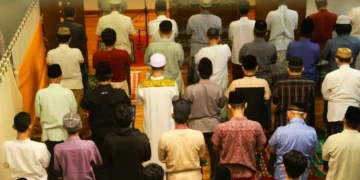


MUHAMMADIYAH.OR.ID, SLEMAN — Muhammad Arifuddin, a member of the Tarjih and Tajdid Council of Muhammadiyah Central Board, emphasized the importance of preserving the purity of tauhid (the oneness of Allah) in the life of every Muslim. His remarks came during a sermon held at KH Sudja Mosque on Wednesday (8/4). He was particularly addressing the widespread tradition of grave visitation during the month of Shawwal.

At the beginning of his sermon, Arifuddin called on the congregation to remain grateful for the blessings of health and the opportunity to gather in a place of worship. He cited a verse from the Qur’an:
“Those who have believed and whose hearts are assured by the remembrance of Allah. Unquestionably, by the remembrance of Allah hearts are assured.” (QS. Ar-Ra’d: 28).
According to him, inner peace stands as one of the ultimate goals of human life. Therefore, he stressed that such tranquility can only be achieved through frequent remembrance of God and by strengthening one’s spiritual connection with Him.
As the month of Shawwal follows Ramadan, Arifuddin highlighted the importance of continuity in worship, particularly through prayers that one’s good deeds are accepted. He referred to the supplication of Prophets Ibrahim and Ismail during the construction of the Kaaba:
“Our Lord, accept [this] from us. Indeed You are the Hearing, the Knowing.” (QS. Al-Baqarah: 127).
“The spirit must be preserved,” he said. “After performing good deeds, we must continue to ask Allah for their acceptance.”
Grave Visitation: Permissible but Purposeful
Ariffudin then addressed a common societal practice, linking Shawwal with routine grave visitation, often performed shortly after the Eid al-Fitr prayer. He clarified that visiting grave is permissible in Islam, as reflected in the saying of the Prophet Muhammad PBUH:
“I had forbidden you from visiting graves, but now visit them.” (Reported by Muslim)
However, he underscored that this permission carries a specific purpose: to remember death and to pray for those who have passed away. It should not involve seeking favors or assistance from the deceased.
He warned against excessive reverence toward graves that could lead to shirk (associating God with other beings), such as making special journeys to certain graves with the intention of asking for personal needs. Islam, he emphasized, firmly blocks all paths that may lead to such deviations.
To support this, he cited verses from the Qur’an:
“Do they associate with Him those who create nothing and they are [themselves] created? And the false deities are unable to give them help, nor can they help themselves.” (QS. Al-A’raf: 191-192)
According to Arifuddin, these verses clearly affirm that anything besides Allah is created beings without power, and therefore unworthy of reliance.
He further referenced another passage:
“And those you invoke besides Him do not possess [as much as] the membrane of a date seed. If you invoke them, they do not hear your supplication. And if they heard, they would not respond to you. And on the Day of Resurrection they will deny your association.” (QS. Fatir: 13-14)
He explained that even the most revered beings lack the ability to hear, let alone answer, human prayers.
A Reminder from the Prophet’s Life
Arifuddin also recalled an incident from the Battle of Uhud, when the Prophet Muhammad PBUH was injured. Over his injury he said: “How can a people succeed who wound their Prophet?”
In response, Allah revealed: “Not for you [Muhammad], is the decision whether He should [cut them down] or forgive them or punish them; indeed, they are wrongdoers.” (QS. Ali Imran: 128)
This verse, he noted, demonstrates that even the Prophet himself did not possess authority over all matters, as ultimate control belongs solely to Allah.
In closing, Arifuddin reiterated that grave visitation should serve as a means of self-reflection,
“The purpose of visiting graves is only twofold: to remember death and to pray for the deceased–not to ask from them,” he stressed.
He urged the congregation to safeguard the purity of tauhid and to avoid practices that may lead to shirk, ensuring that all acts of worship remain sincere and acceptable in the sight of Allah Subhanahu wa Ta’ala.