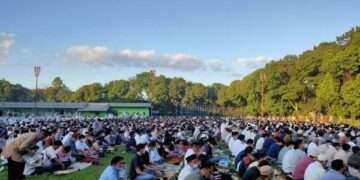


In the final ten days of Ramadan, many Muslims choose to spend extended time in mosques to perform i’tikaf, a form of spiritual retreat. I’tikaf essentially means remaining in the mosque with the intention of drawing closer to God through worship. For this reason, the practice usually takes place during the last ten days of the holy month.

The tradition traces back to the Prophet Muhammad. His wife, Aisha, reported a well-known hadith describing the practice:
أَنَّ النَّبِيَّ صَلَّى اللّٰهُ عَلَيْهِ وَسَلَّمَ كَانَ يَعْتَكِفُ الْعَشَرَ الْأَوَاخِرَ مِنْ رَمَضَانَ حَتَّى تَوَفَّاهُ اللّٰهُ، ثُمَّ اعْتَكَفَ أَزْوَاجُهُ مِنْ بَعْدِهِ
(رواه مسلم)
“Indeed, the Prophet, peace be upon him, used to observe i’tikaf during the last ten days of Ramadan until he passed away. Then his wives continued the practice after his death.” (Narrated by Muslim)
Remaining in the Mosque During I’tikaf
Islamic scholars generally agree that a person observing i’tikaf (mu’takif) should remain inside the mosque throughout the period of retreat. The central idea of i’tikaf involves dedicating time exclusively to worship while stepping away from everyday distractions. By staying in the mosque, worshippers can focus more fully on prayer and reflection.
However, scholars also recognize several situations that allow a mu’takif to leave the mosque.
- First, a person may leave for religious obligations. For example, someone may attend Friday prayers if the mosque where they stay does not host the congregational service.
- Second, natural human needs permit temporary departure. These include using the restroom or performing a required ritual bath.
- Third, emergencies may also justify leaving the mosque. Structural damage or other dangers that threaten the safety of worshippers fall into this category.
Therefore, while i’tikaf encourages seclusion in the mosque, Islamic guidance still considers human needs and practical circumstances.
Recommended Worship during the Retreat
First, worshippers may increase voluntary prayers. A mu’takif can perform prayers such as tahiyyatul masjid upon entering the mosque, night prayers, and other recommended prayers. These acts help deepen spiritual devotion during the retreat.
Second, many spend time reciting the Qur’an. Reading and reflecting on the holy text is especially encouraged during Ramadan. The quiet atmosphere of the mosque often helps worshippers read with greater focus and contemplation.
Third, remembrance of God, known as dhikr, becomes another central activity. This practice involves repeating phrases of praise and devotion. Although simple, it holds significant spiritual value. Through dhikr, believers maintain constant awareness of God. At the same time, i’tikaf also offers an opportunity to increase personal supplications.
Fourth, participants may read religious books. Besides prayer and remembrance, many mu’takif devote time to studying Islamic literature. These readings may include Qur’anic commentary, collections of hadith, or books discussing Islamic teachings. Such study can deepen religious understanding while filling the hours of retreat with meaningful activity
Through these various practices, i’tikaf becomes a moment for Muslims to renew their spiritual commitment. Time that daily responsibilities usually consume can instead be devoted to worship and reflection
Referensi:
Majelis Tarjih dan Tajdid Pimpinan Pusat Muhammadiyah, “Fatwa Tarjih Tentang I’tikaf”, https://web.suaramuhammadiyah.id/2016/06/25/fatwa-tarjih-tentang-itikaf/, diakses pada Sabtu, 07 Maret 2025.