Tuesday, October 6, 2026
  • AR
  • ENG
  • IDN
Muhammadiyah Media
  • EDUCATION
  • HEALTH
  • ECONOMY
  • HUMANITY
  • OTHERS
    • RELIGION
    • LAW & POLITICS
    • IDEOLOGY
    • SOCIO-CULTURE
    • ENVIRONMENT
    • MEDIA
No Result
View All Result
  • Login
Muhammadiyah Media
  • EDUCATION
  • HEALTH
  • ECONOMY
  • HUMANITY
  • OTHERS
    • RELIGION
    • LAW & POLITICS
    • IDEOLOGY
    • SOCIO-CULTURE
    • ENVIRONMENT
    • MEDIA
No Result
View All Result
  • Login
Muhammadiyah Media
No Result
View All Result
  • EDUCATION
  • HEALTH
  • ECONOMY
  • HUMANITY
  • OTHERS
Home News

Dynamic Aqidah in Muhammadiyah: What Does It Mean?

by Persyarikatan Muhammadiyah
1 year ago
in News
Reading Time: 4 mins read
A A
Dynamic Aqidah in Muhammadiyah: What Does It Mean?

MUHAMMADIYAH.OR.ID, YOGYAKARTA – The secretary of the Council for Higher Education, Research, and Development of the Main Board of Muhammadiyah, Ahmad Muttaqin, asserted that the concept of aqidah in Muhammadiyah is not static, rather it is dynamic and develops under the spirit of tajdid (renewal). The Professor of Sunan Kalijaga Islamic State University stated his argument at the Seminar Sehari Risalah Aqidah Islam at Muhammadiyah University of Yogyakarta (UMY) on Saturday (29/09). 

Muttaqin opened his presentation by responding to the notion that Islamic theology (‘ilm al’kalam) has stagnated and revolves only around classical issues. 

“I don’t see the development of Islamic theology as entirely stagnant. At the faculty of Ushuluddin (foundation of religion), for instance, there is a course on contemporary kalam that explores modern thought, as previously discussed by speakers such as Ustaz Hamim Ilyas,” he said.

He played a video which shows the urgency of an authentic aqidah redefinition. According to him, Muhammadiyah has laid the first brick of this movement, including the attempt of the Council for Religious Opinion and Tajdid of Central Java to formulate the answer of the people’s questions concerning aqidah. 

Before delving further into the discussion, Muttaqin clarified that he is not an expert in this field, but rather an insider observer. He also claims that the terms aqidah, kalam, ushuluddin, and Islamic theology each carry different nuances of meaning, yet he would use them interchangeably throughout his presentation. 

Tracing Muhammadiyah’s Theological Thought

Quoting Indonesia and Islam in Transition by Leonard C. Sebastian and Syed Huzaifah Bin Othman Alkaff, he explained that Muhammadiyah was born out of the inspiration of Islamic Reformism, particularly the thoughts of Muhammad Abduh and Rashid Rida. From its inception, the movement combined a rational interpretation of the Quran with an openness to modern knowledge, although it also contained elements of puritanism. 

RelatedArticle

Al-Istihsan Opens Room for Consideration in Islamic Legal Rulings

Four Sins Whose Punishment May Come in This World

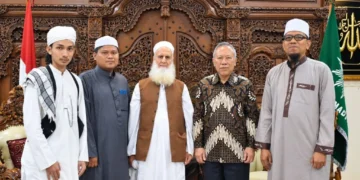
Muhammadiyah Receives Jamia Binoria Pakistan, Discusses Strengthening Education and Dakwah

Muttaqin mentioned the label of puritanism once coined by the Western scholars such as James Peacock in Purifying the Faith. He, furthermore, invited the audience to reflect on whether this label is actually accepted within the Muhammadiyah community. 

“When the puritan label makes us feel okay, we might accept it. But when it comes with attributes that don’t quite fit, we are startled and ask, ‘is it really like that?’” he said.

He also reviewed Muhammadiyah’s societal and educational activism which has always gone hand in hand with the spirit of other religious services. Alwi Shihab’s study, particularly on the history between Muhammadiyah and Ahmadiyah in the 1920s is one notable example. 

According to Muttaqin, Muhammadiyah has consistently opposed the practice of takhayul (superstition) because it simply does not align with either Qur’an and Hadits or with scientific approaches.

Is there anyone who disagrees with this view? I believe we can all agree that Muhammadiyah firmly adheres to the Qur’an and Sunnah as the sole valid sources of law, while also recognizing the importance of ijma’ (unanimous agreement) in interpreting Islamic principles,” he stated. 

He added that Muhammadiyah is not merely a theological organization, but a reformist movement firmly grounded in its charitable endeavors. He introduced the concept of ‘theopraxis’ to emphasize that faith must be manifested in real life, not only limited to a mere discourse. 

Muttaqin mapped the development of Islamic theology into three areas (early, classical, and modern), while drawing comparisons with Christian theology, which also ranges from orthodox and conservative to liberationist approaches. In the context of Muhammadiyah, he highlighted Ahmad Dahlan’s al-Ma’un theology. Amien Rais’ concept of social tauhid, Hamim Ilyas’ thematic exegesis, and contemporary eco-theologies such as jurisprudence on water, disaster, and information.

Challenges Ahead and the Path Forward

Muttaqqin observed that Muhammadiyah theological thought is still in the process of becoming, not yet fully established. Therefore, it needs to be continuously curated to remain in line with the identity of da’wah movement, tajdid, education, and humanitarian service.

“We need to formulate an aqidah or theology that serves as an ideal foundation for the entire Muhammadiyah ecosystem, including its leaders, social enterprises, and autonomous organizations such as the Department of Arts, Culture, and Sports,” he explained.  

He also addressed the challenge of puritanism, which is sometimes seen as less accommodating toward local culture, while religious moderation emphasizes the importance of hospitality toward community traditions. 

In his closing remarks, Muttaqin underlined the significance of a wasathiyah (moderation) and progressive Islamic theology that remains responsive to contemporary challenges. 

“Let us take this opportunity to formulate an aqidah that is not only strong in theory, but also capable of energizing Muhammadiyah as a movement of da’wah and tajdid that embodies rahmatan lil-’alamin,” he concluded. (Bintang Adrian)


ShareTweetSendShareShare
Previous Post

Muhammadiyah’s Position on Aqidah Renewal

Next Post

Responding to the Agnosticism Trend among Youngsters, Abdul Mu’ti: Islamic Preacher Must Listen More

RelatedPosts

Al-Istihsan Opens Room for Consideration in Islamic Legal Rulings
News

Al-Istihsan Opens Room for Consideration in Islamic Legal Rulings

6 October 2026
Four Sins Whose Punishment May Come in This World
Islamic Law

Four Sins Whose Punishment May Come in This World

6 October 2026
Muhammadiyah Receives Jamia Binoria Pakistan, Discusses Strengthening Education and Dakwah
Education

Muhammadiyah Receives Jamia Binoria Pakistan, Discusses Strengthening Education and Dakwah

5 October 2026
British Ambassador Praises Muhammadiyah’s Growth and Expanding Role
News

British Ambassador Praises Muhammadiyah’s Growth and Expanding Role

5 October 2026
Next Post
Responding to the Agnosticism Trend among Youngsters, Abdul Mu’ti: Islamic Preacher Must Listen More

Responding to the Agnosticism Trend among Youngsters, Abdul Mu’ti: Islamic Preacher Must Listen More

Raja Muda Perlis Appreciates the Construction of the Main Venue of the 49th Muktamar Muhammadiyah in North Sumatra

Raja Muda Perlis Appreciates the Construction of the Main Venue of the 49th Muktamar Muhammadiyah in North Sumatra

Abdul Mu’ti Highlights Key Challenges in Indonesia’s Democracy

Abdul Mu’ti Outlines “3C” as the Key to Advancing Muhammadiyah Social Enterprise

Populer News

  • National Narcotics Agency Commends Muhammadiyah’s Efforts in Eradicating Drug Abuse

    National Narcotics Agency Commends Muhammadiyah’s Efforts in Eradicating Drug Abuse

    0 shares
    Share 0 Tweet 0
  • Catholic Nun Earns Master’s in Midwifery at UNISA Yogyakarta, Strengthening Interfaith Brotherhood

    0 shares
    Share 0 Tweet 0
  • Safa and Marwa: Uncovering the Historical Depths of Two Sacred Hills

    0 shares
    Share 0 Tweet 0
  • Is It Permissible for Muslims to Blow Out Birthday Candles?

    0 shares
    Share 0 Tweet 0
  • Fatwa on Using Mirin in Cooking for Muslims in Japan

    0 shares
    Share 0 Tweet 0
  • Man of Action, Man of Dialogue: The Legacy of KH Ahmad Dahlan

    0 shares
    Share 0 Tweet 0
  • Muhammadiyah and NU Are the Largest and Most Influential Religious Organizations in the World

    0 shares
    Share 0 Tweet 0
  • Ta’aruf in Islam: Ethical Guidelines for Getting to Know Potential Spouse

    0 shares
    Share 0 Tweet 0
  • Leader’s Profile: Prof. Dr. Haedar Nashir, M.Si.

    0 shares
    Share 0 Tweet 0
  • The Islamic Character of Lionel Messi

    0 shares
    Share 0 Tweet 0

Council

  • Religious Opinion & Tajdid
  • Religious Preaching
  • Higher Education, Research, & Development
  • Elementary, Secondary, & Non-Formal Education
  • Cadre & Human Resources
  • Public Health
  • Social Welfare
  • Economy, Business, & Tourism
  • Waqf Utilization
  • Community Empowerment
  • Law and Human Rights
  • Enviromental Preservation
  • Publications & Information

Institutions

  • Islamic Boarding School
  • Branch & Mosque Development
  • Strategic Studies & Partnerships
  • Financial Supervision & Development
  • Disaster Management Center
  • Charity Management
  • Micro, Small, & Medium Enterprise
  • Politics & Public Policy
  • Arts & Culture
  • Sports & Development
  • International Relations & Cooperation
  • Community Da'wah
  • Halal Auditing & "Halalan Thayyiban" Studies
  • Hajj & Umroh
  • Legal Aid & Public Advocacy

Bureau

  • Organization Development
  • Financial Management
  • Communication & Public Services

Ortom

  • 'Aisyiyah Woman Association
  • Muhammadiyah Youth Association
  • Nasyiatul 'Aisyiyah Young Woman Association
  • Muhammadiyah University Student Association
  • Muhammadiyah Student Association
  • Muhammadiyah Tapak Suci Martial Arts
  • Muhammadiyah Hizbul Wathan Scouts

Sumatra Region

  • Nanggroe Aceh Darussalam
  • Sumatra Utara
  • Sumatra Selatan
  • Sumatra Barat
  • Bengkulu
  • Riau
  • Kepulauan Riau
  • Jambi
  • Bangka Belitung

Kalimantan Region

  • Kalimantan Barat
  • Kalimantan Timur
  • Kalimantan Selatan
  • Kalimantan Tengah
  • Kalimantan Utara

Jawa Region

  • D.I. Yogyakarta
  • Banten
  • DKI Jakarta
  • Jawa Barat
  • Jawa Tengah
  • Jawa Timur

Bali & Kepulauan Nusa Tenggara

Region

  • Bali
  • Nusa Tenggara Barat
  • Nusa Tenggara Timur

Sulawesi Region

  • Gorontalo
  • Sulawesi Barat
  • Sulawesi Tengah
  • Sulawesi Utara
  • Sulawesi Tenggara
  • Sulawesi Selatan

Maluku dan Papua Region

  • Maluku Utara
  • Maluku
  • Papua
  • Papua Barat
  • Papua Barat daya

Special Branch

  • Kairo Mesir
  • Iran
  • Sudan
  • Belanda
  • Jerman
  • United Kingdom
  • Libya
  • Malaysia
  • Prancis
  • Amerika Serikat
  • Jepang
  • Tunisia
  • Pakistan
  • Australia
  • Rusia
  • Taiwan
  • Tunisia
  • TurkI
  • Korea Selatan
  • Tiongkok
  • Arab Saudi
  • India
  • Maroko
  • Yordania
  • Yaman
  • Spanyol
  • Hongaria
  • Thailand
  • Kuwait
  • New Zealand

Category

  • Education
  • Health
  • Economy
  • Humanity
  • Religion
  • Law & Politics
  • Ideology
  • Culture
  • Media

About

  • History
  • Brand Guideline

Services

  • Information

Apps

  • Muhammadiyah ID
  • MASA
  • EventMu
  • BukuMu
  • SehatMu
  • KaderMu
  • LabMu

More Information

  • Editorial
  • Contact
  • Privacy Policy
© 2024 Persyarikatan Muhammadiyah

Welcome Back!

Login to your account below

Forgotten Password?

Retrieve your password

Please enter your username or email address to reset your password.

Log In

Add New Playlist

No Result
View All Result
  • icon bendera arab
  • bendera indonesia
  • EDUCATION
  • HEALTH
  • ECONOMY
  • HUMANITY
  • OTHERS
    • RELIGION
    • LAW & POLITICS
    • IDEOLOGY
    • SOCIO-CULTURE
    • ENVIRONMENT
    • MEDIA
  • Login

© 2024 Persyarikatan Muhammadiyah - Cahaya Islam Berkemajuan.